
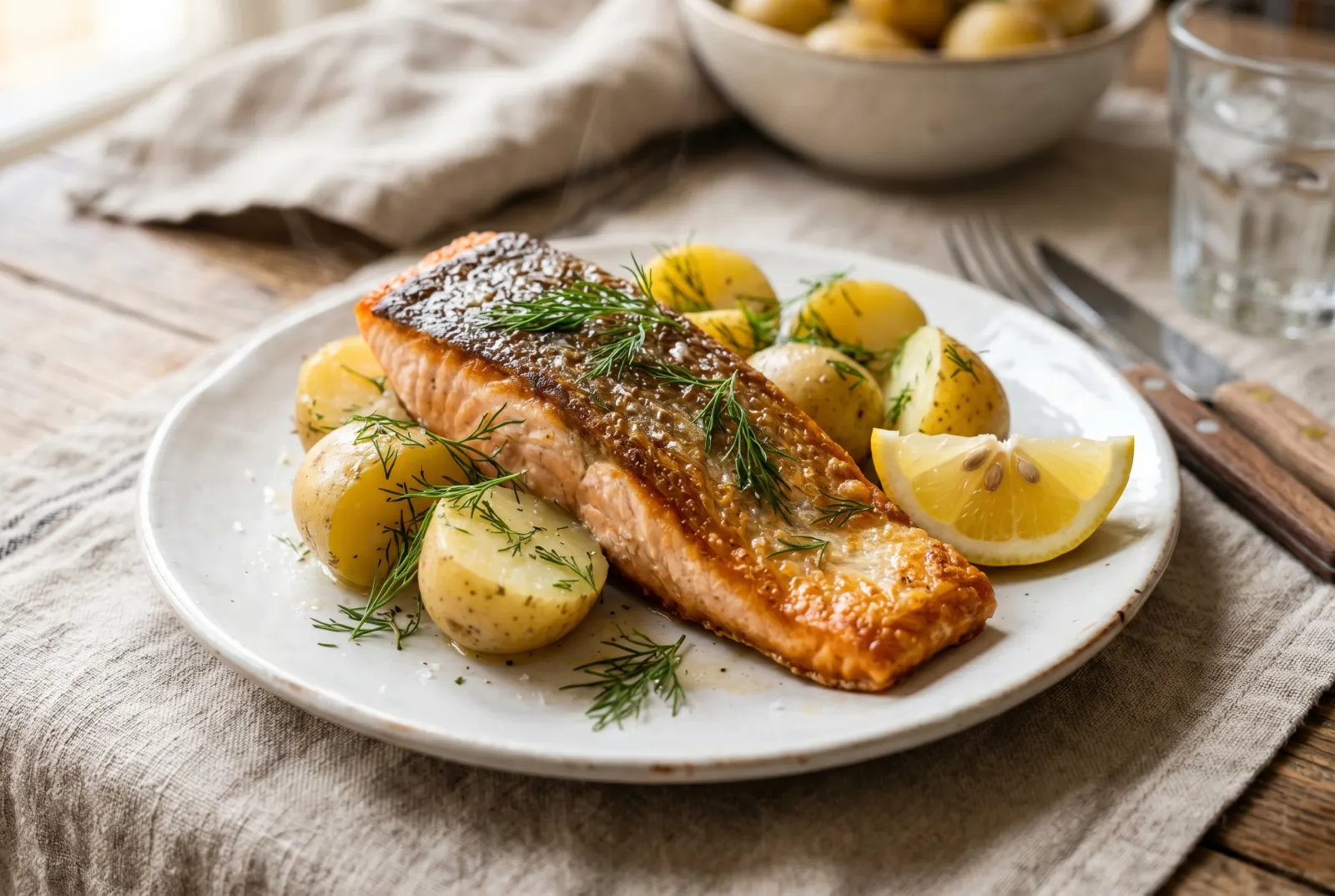
Baked Salmon with Dill & New Potatoes
A simple, elegant dinner, salmon fillet baked with fresh dill, garlic and lemon over halved new potatoes. 380 kcal, high protein, done in 30 minutes.
- salmon fillet, skin on 160g
- new potatoes, halved 200g
- olive oil 1 tsp
- fresh dill, roughly chopped 3 tbsp
- garlic clove, halved 1
- lemon — half squeezed, half cut into wedges ½
- sea salt & white pepper pinch
- 1
Preheat oven to 200°C (fan 180°C). Toss halved potatoes with ½ tsp olive oil and a pinch of salt. Spread on a baking tray and roast for 15 minutes.
- 2
Push potatoes to one side of the tray. Place the salmon skin-side down in the centre. Rub with the remaining olive oil and the cut garlic.
- 3
Squeeze half the lemon over the salmon. Season with salt and white pepper. Scatter chopped dill generously over both the salmon and potatoes.
- 4
Return the tray to the oven for 10–12 minutes until the salmon is cooked through. The skin should be crispy; the flesh should flake at the thickest part.
- 5
Serve with lemon wedges alongside.
This is one of the simplest dinners I know, and it needs almost no technique. Salmon baked with dill and lemon turns up across Ukraine, the Baltic states and Scandinavia, where dill is used as freely as other cuisines use basil. Dill earns its place beside fish on flavour alone. Its bright, faintly aniseed taste cuts through the richness of the salmon in a way few other herbs manage.
The whole meal cooks on one tray. The potatoes go in first because they need longer, and the salmon joins them for the final stretch, so everything is ready at the same moment.
Halving the new potatoes gives you more cut surface to crisp against the hot tray, and the edges turn golden while the insides stay soft and creamy.
Nutritionally this is about as well balanced as a dinner gets. Salmon is one of the best sources of the long-chain omega-3 fats EPA and DHA, along with high-quality protein and vitamin D. New potatoes provide slow energy and some fibre, especially with the skins left on. There’s very little added fat in the dish, because the salmon brings its own. The most important thing is not to overcook the fish. It’s done when the flesh has turned from translucent to opaque and flakes easily at the thickest point. A thicker fillet may need a couple more minutes and a thin tail piece a couple fewer, so check it rather than trusting the clock. White pepper is a small detail I’d keep, because it seasons without leaving dark specks on the pale fish.
Leftover salmon keeps for a day or two in the fridge and is lovely cold, flaked into a salad with cucumber and a spoonful of kefir dressing. Reheating tends to dry it out, so I’d avoid it. For a variation, swap the dill for chives, or scatter a few capers over the fish before it goes into the oven for a sharper, saltier finish.
Frequently asked questions
Can I use frozen salmon?
Yes, thaw it fully and pat it dry, otherwise it steams instead of roasting.
What other fish works?
Trout is the closest match. Cod works too but cooks faster, check it a few minutes early.
Is it good for meal prep?
Keeps 2 days in the fridge. Reheat gently, or flake the salmon cold over the potatoes as a salad.
 breakfast
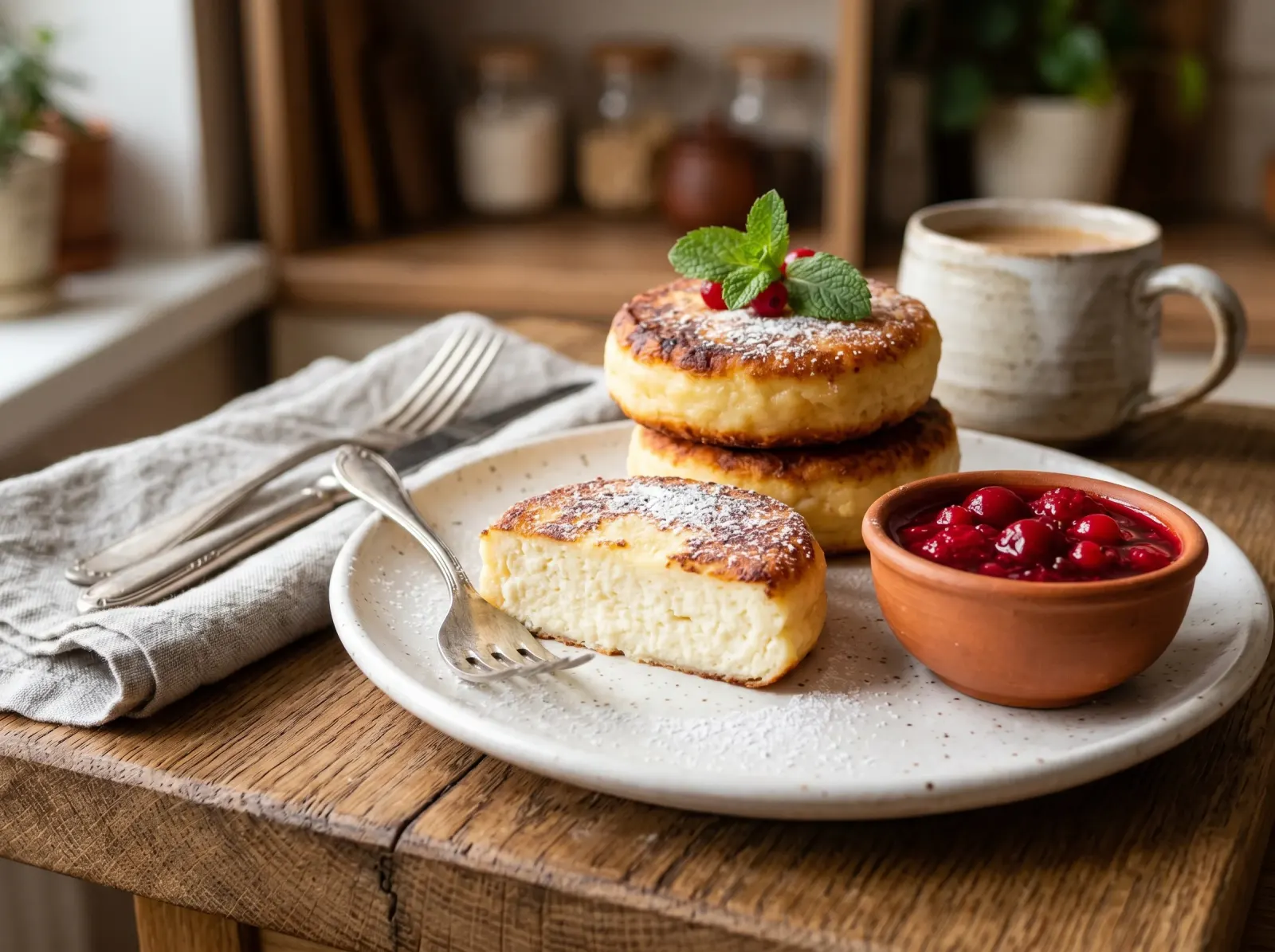
 Syrniki — Cottage Cheese Pancakes
Fluffy Ukrainian cottage cheese pancakes with berry compote. A 290-calorie breakfast that tastes like dessert. Traditional, high-protein, naturally filling.
 lunch
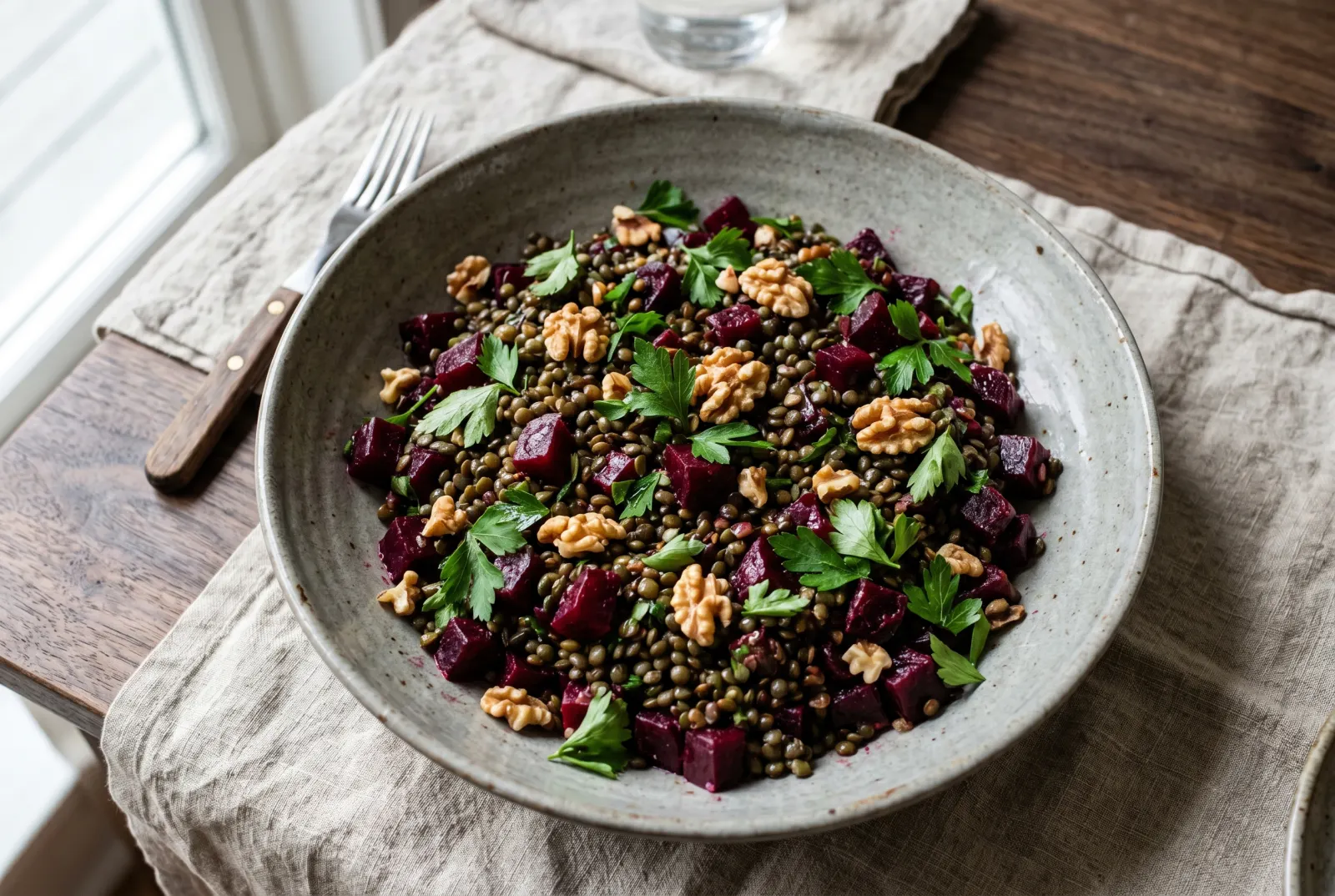
lunch Lentil, Beetroot & Walnut Salad
A hearty Eastern European salad with green lentils, roasted beetroot, walnuts and fresh parsley in a red wine vinegar dressing. 235 kcal, high in iron and fibre.
 dinner
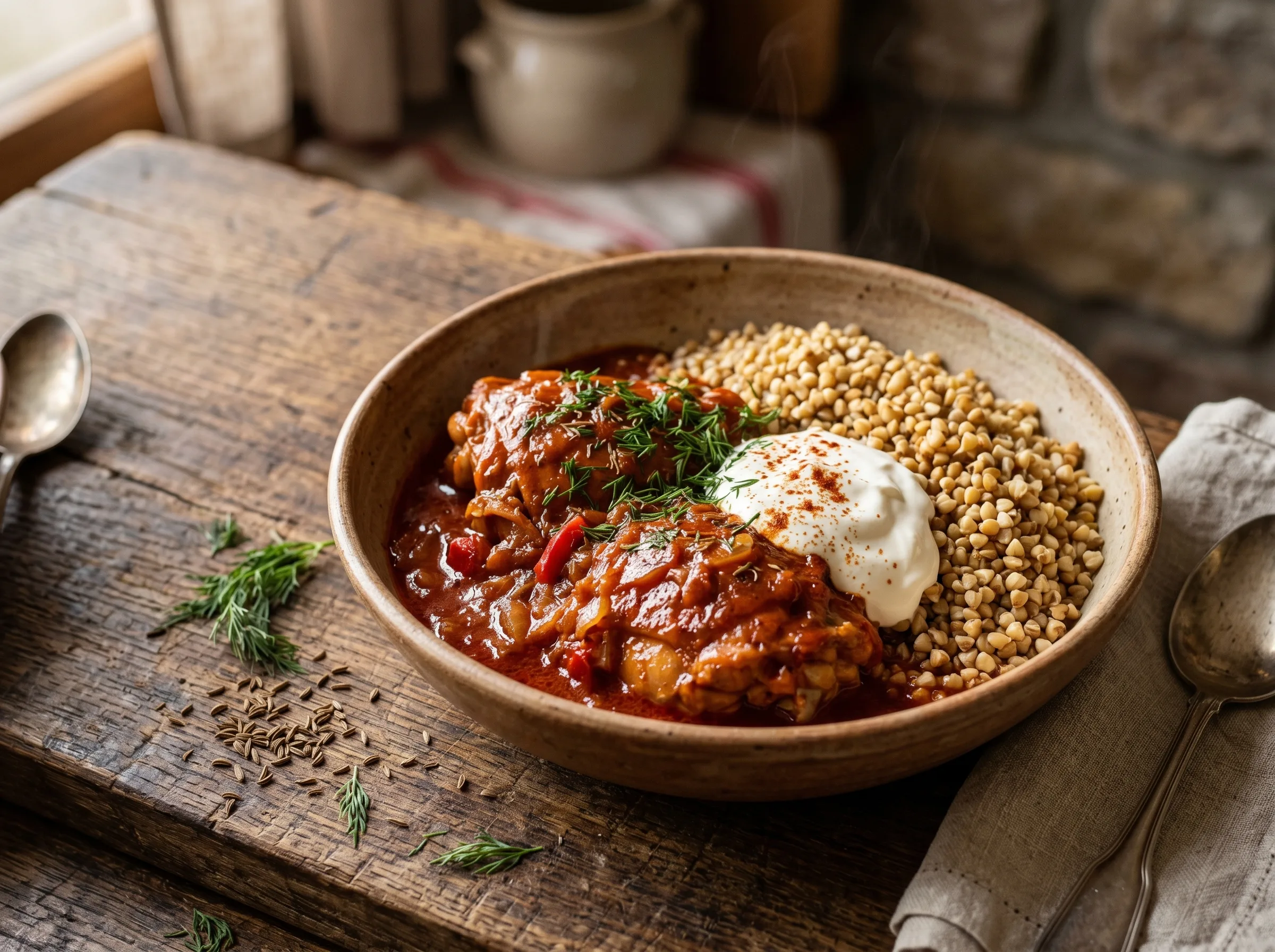
 Kefir Chicken Paprikash with Buckwheat
The Hungarian classic, made lighter. Tender chicken thighs in a deep-red paprika kefir sauce, served over nutty buckwheat. Under 400 calories, 38g protein.
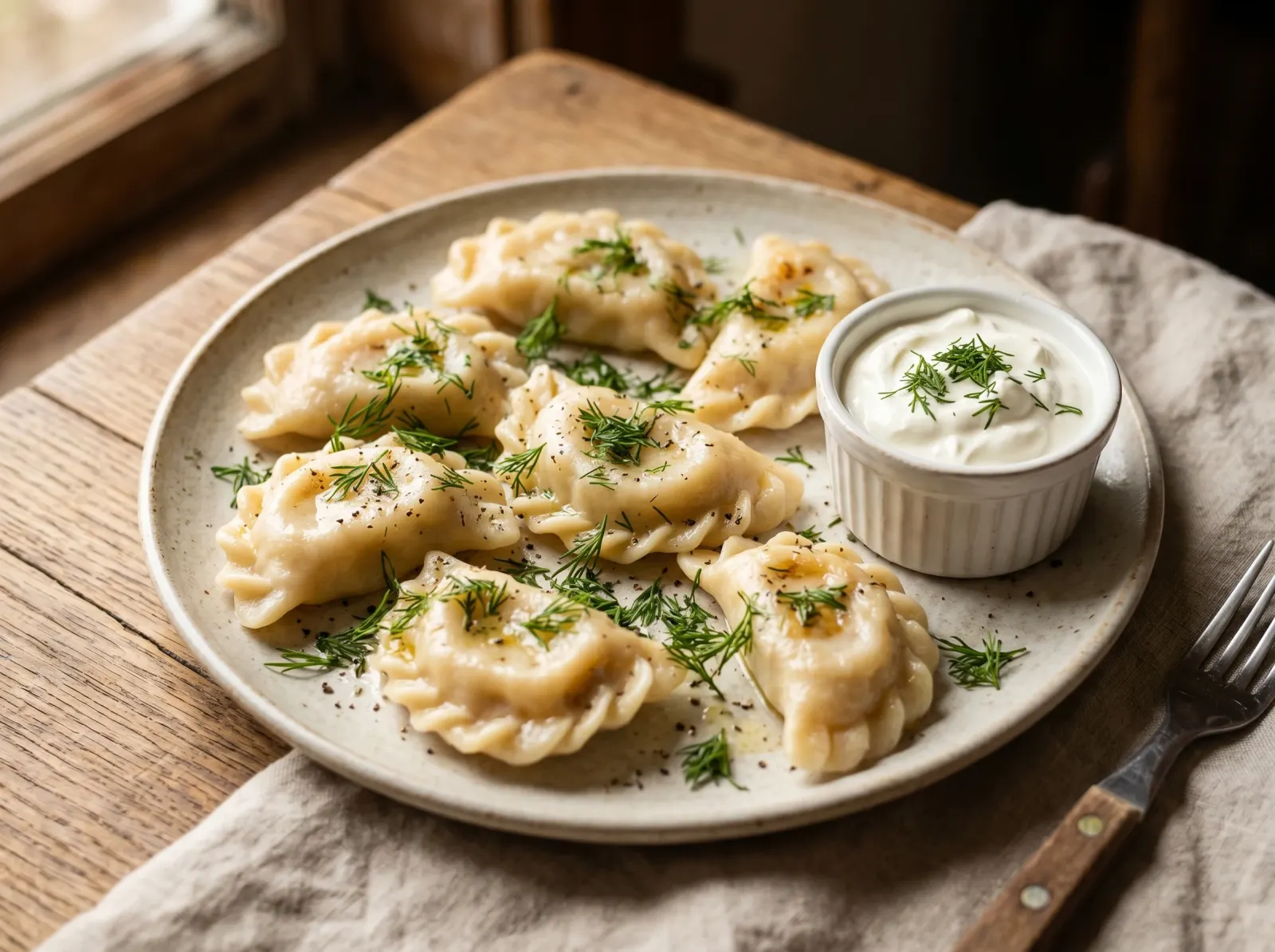 dinner
 Varenyky with Potato & Dill Filling
Traditional Ukrainian dumplings filled with mashed potato, caramelised onion and fresh dill. 320 kcal per serving of 8. Lighter than you think, and completely worth the effort.
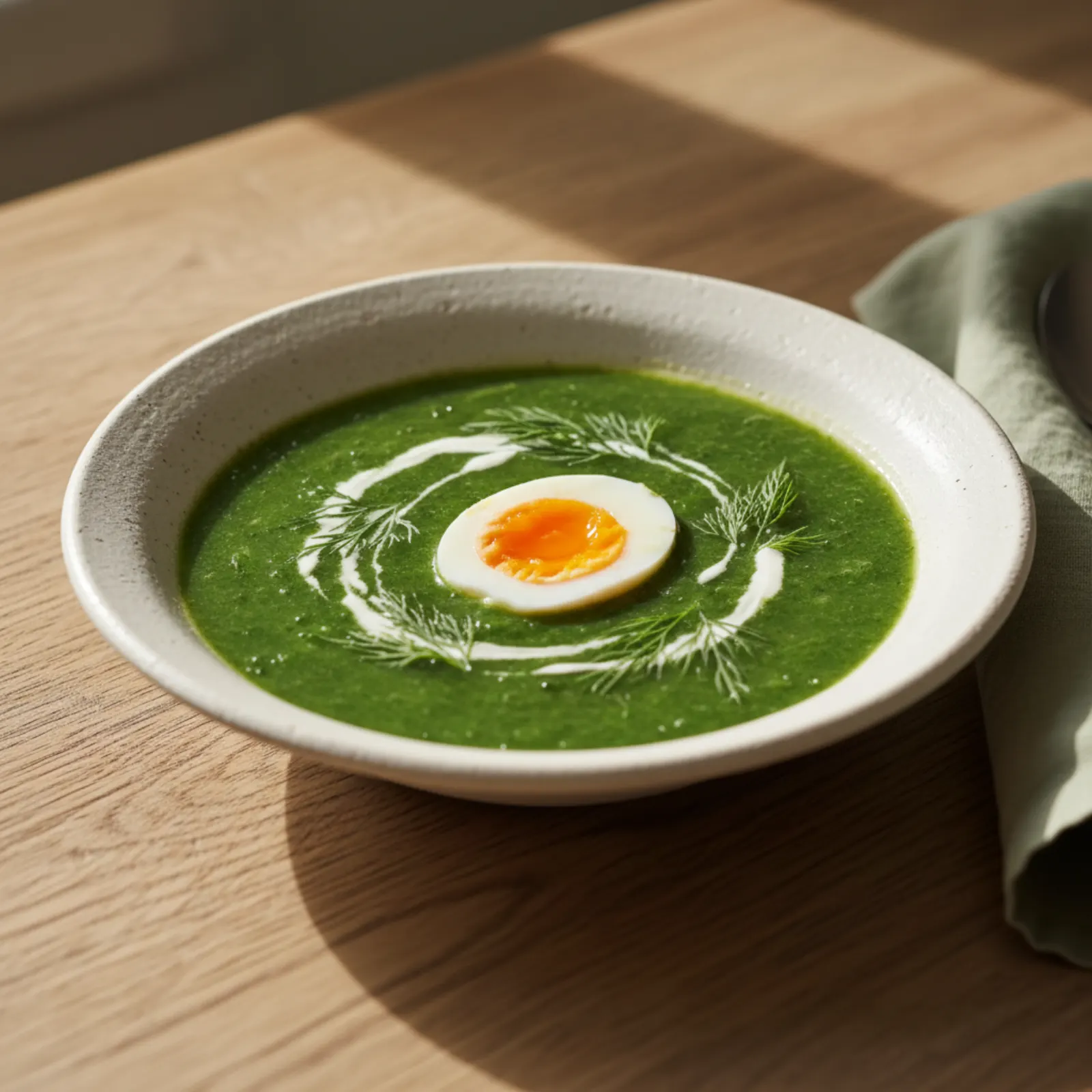 lunch
lunch Spring Nettle and Egg Drop Soup (Kropyvianyi Borshch)
A vibrant Ukrainian spring soup made with tender young nettles, eggs, and vegetables, delivering a powerful boost of iron, vitamin C, and plant protein in every bowl.
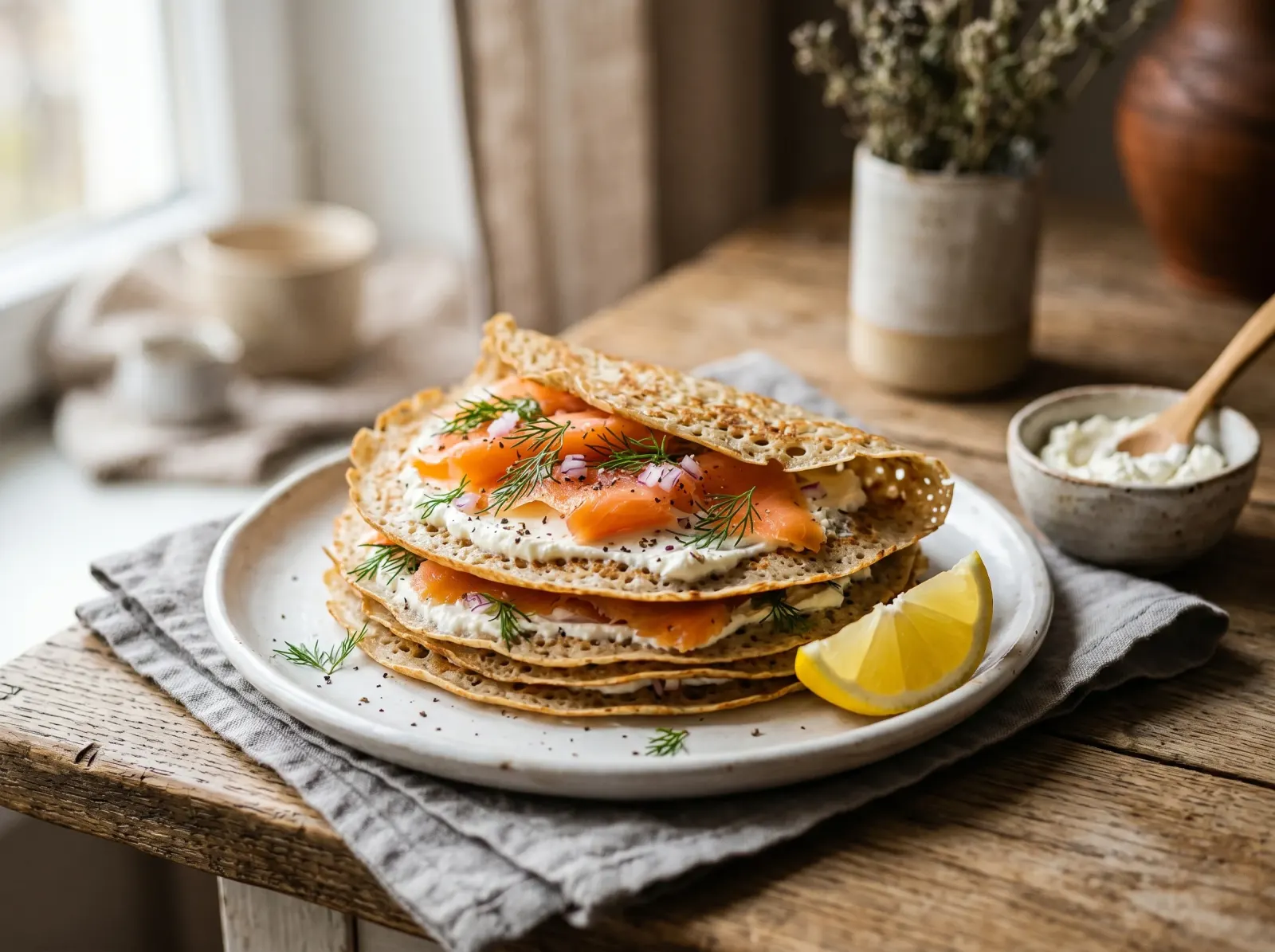 breakfast
 Buckwheat Blini with Smoked Salmon & Dill
Thin, golden buckwheat pancakes with smoked salmon and fresh dill. A special-occasion breakfast at 310 calories. Gluten-free and naturally high in protein.