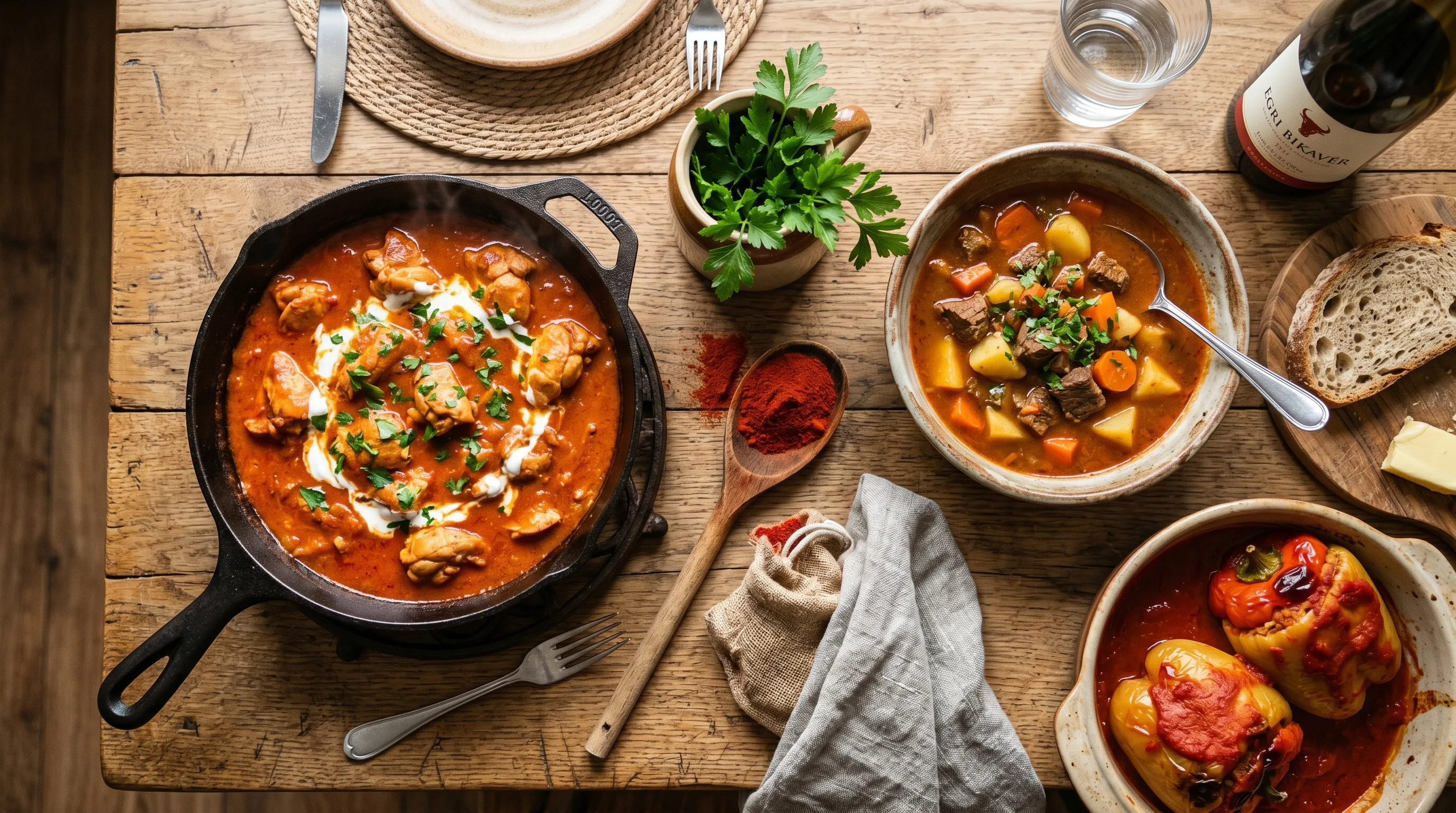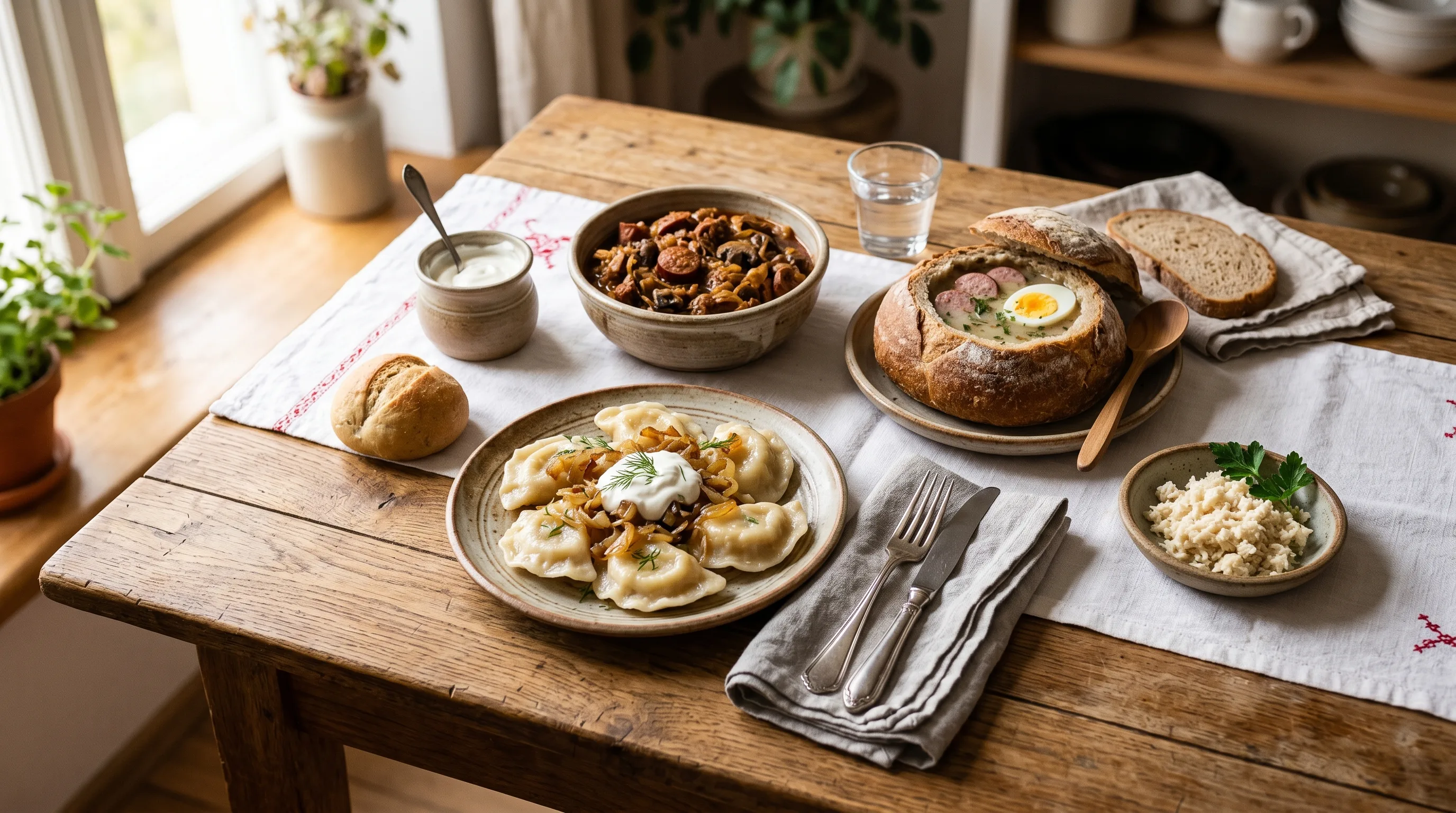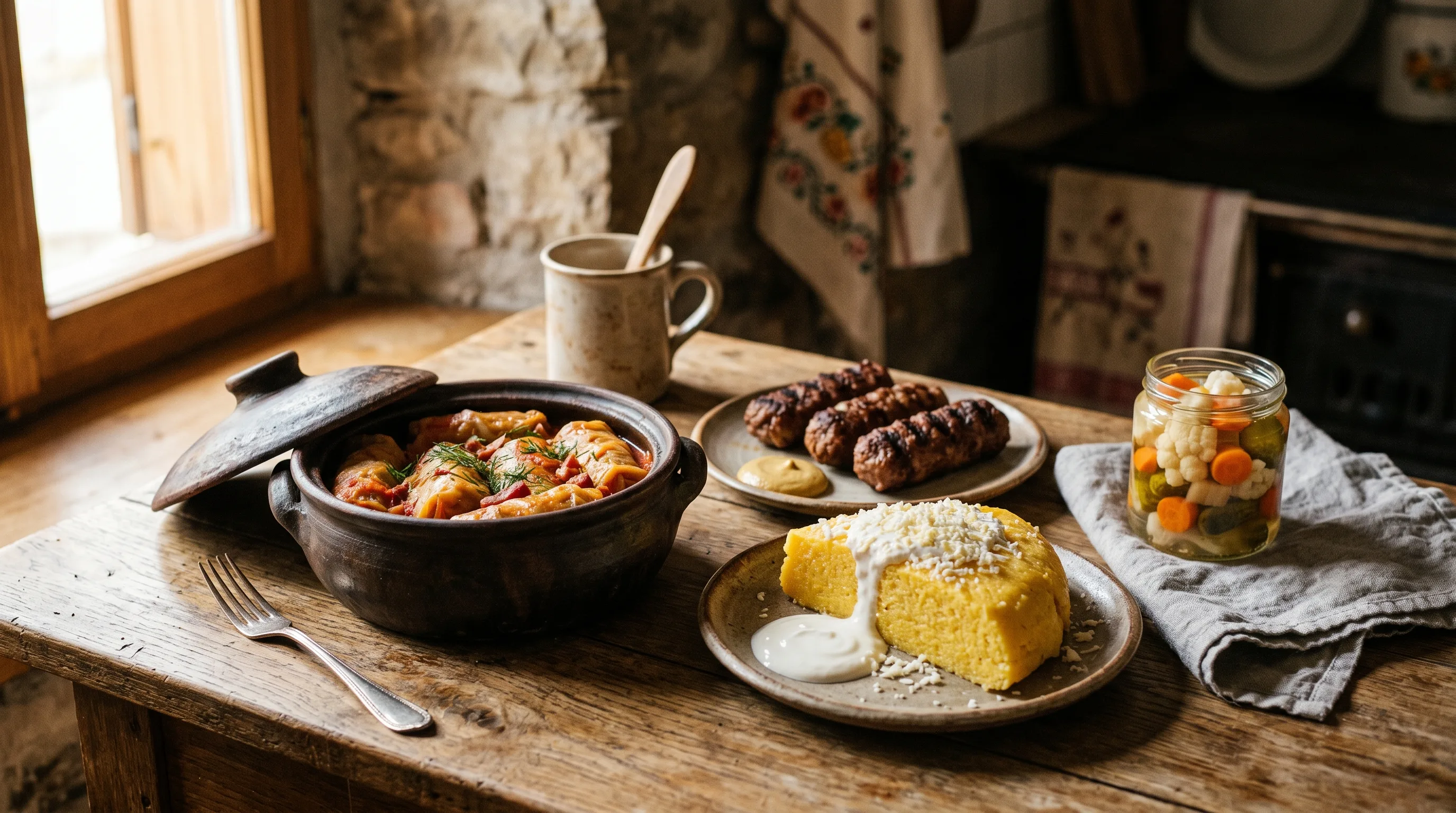
Eastern Europe is not a single cuisine, it is a fascinating mosaic of distinct national traditions, each shaped by its landscape, climate, history, and neighbours. Ukrainian food is different from Hungarian food, which is different from Polish food, which is different from Czech and Slovak cooking. What they share is a common thread of fermented foods, slow broths, root vegetables and lean proteins that, handled well, make for some very satisfying healthy eating. This guide introduces each national tradition and its best lighter dishes.
Quick country comparison
What all these cuisines share
Fermented foods as daily staples
Every Eastern European national cuisine places fermented food at the centre of the daily diet, sauerkraut, kefir, fermented pickles, fermented bread. This is not a health trend; it is a centuries-old preservation necessity that turns out to be very good for gut health, immunity and metabolism.
Soup as the foundation of every meal
From Ukrainian borscht to Romanian ciorbă to Polish żurek, every national tradition begins its main meal with soup. This habit, consistently practised, creates natural calorie control at every meal. A bowl of vegetable-rich broth before a main course reduces total calorie intake by an average of 20% without any effort.
Root vegetables and brassicas as the vegetable backbone
Beets, carrots, celeriac, turnips, parsnips, cabbage, sauerkraut, these are the vegetable foundation of Eastern European cooking. All are nutritionally dense, very affordable, and particularly suited to winter cooking. All can be grown locally across the entire region. All are extremely diet-friendly.
Buckwheat and rye as grain staples
Across the region, buckwheat (in Ukraine, Russia, Slovakia) and rye (in Poland, Czech Republic, the Baltic states) are the traditional daily grains, far superior to white wheat in terms of fibre content, glycaemic index, and micronutrient density. This grain tradition is an underrated nutritional strength of Eastern European eating.
How to use the country guides
Each article in this pillar is a complete standalone guide to the healthiest dishes from one national tradition. If you are of Ukrainian heritage, start with the Ukrainian guide. If you discovered Hungarian food and want to cook more of it, start there. Or work through all five, the more you explore, the more you will find that these cuisines complement each other beautifully.
- Each guide includes: the 6–8 healthiest traditional dishes from that country
- Calorie estimates for each dish
- Key healthy cooking techniques specific to that national tradition
- The 3 ingredients you must stock to cook this cuisine authentically
- Links to full recipes where they exist on this blog
Frequently asked questions
Which Eastern European country has the healthiest cuisine?
Every national tradition has genuine strengths and genuine challenges. Ukraine scores highest on fermented food diversity (daily kefir, sauerkraut, pickles, fermented bread). Hungary scores highest on high-protein dishes (paprikash, stuffed peppers). Poland scores highest on probiotic richness and fibre from bigos and żurek. Romania has some of the lightest overall calorie profiles thanks to the sour broth (ciorbă) tradition.
Can I combine recipes from different Eastern European countries?
Absolutely, the cuisines are complementary. A Ukrainian borscht starter with Hungarian chicken paprikash as the main is a completely natural and delicious combination. A Slovak cottage cheese and buckwheat dish alongside Polish bigos is harmonious. Eastern European cuisines travel well together on the same table.
Do I need to know how to cook Eastern European food to start?
Not at all. Every recipe on this blog is written for people who have never cooked Eastern European food before, with explanations of unfamiliar ingredients, sourcing tips, and technique guides. Start with borscht (the most approachable cornerstone recipe) and go from there.
See also: