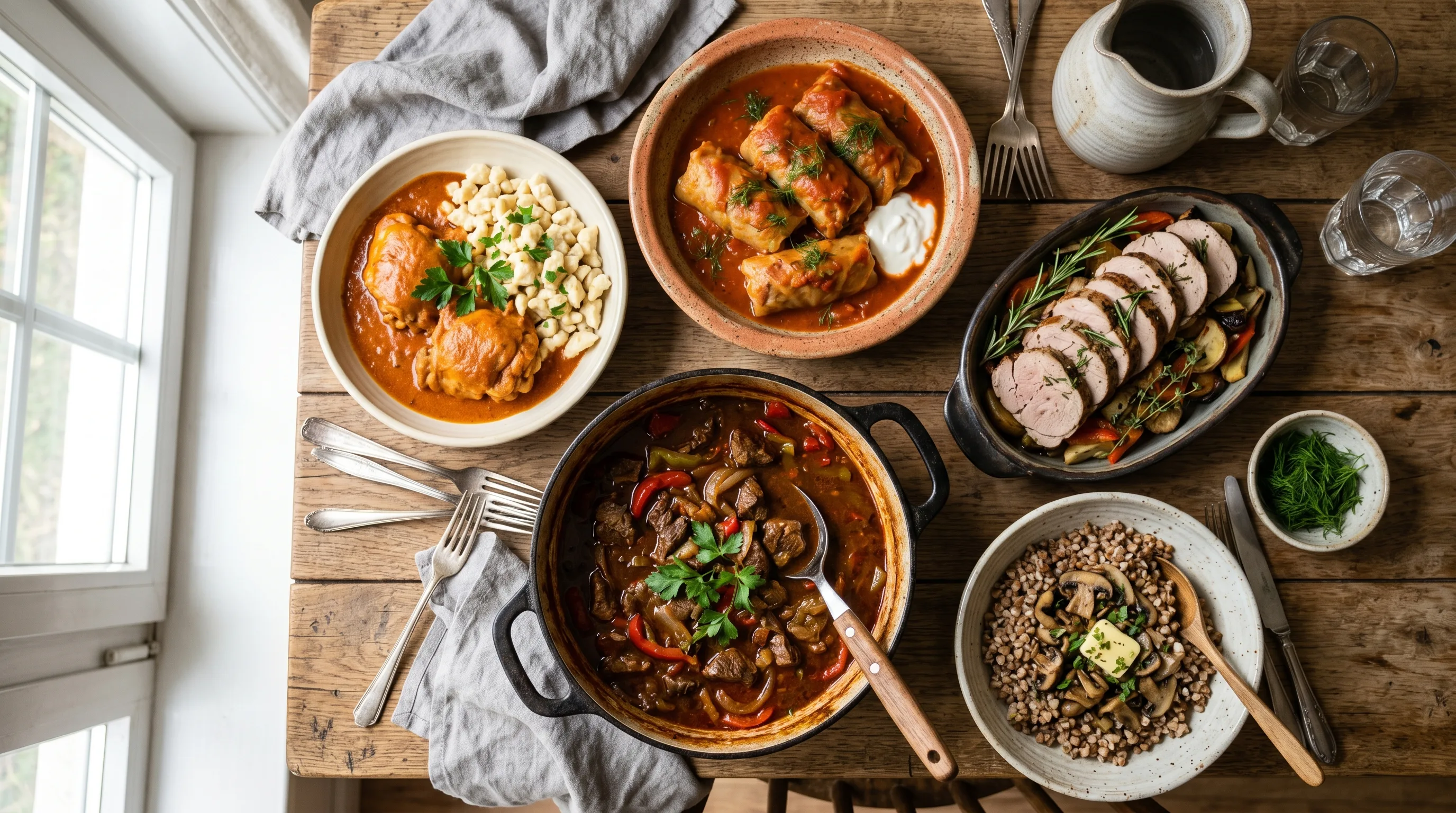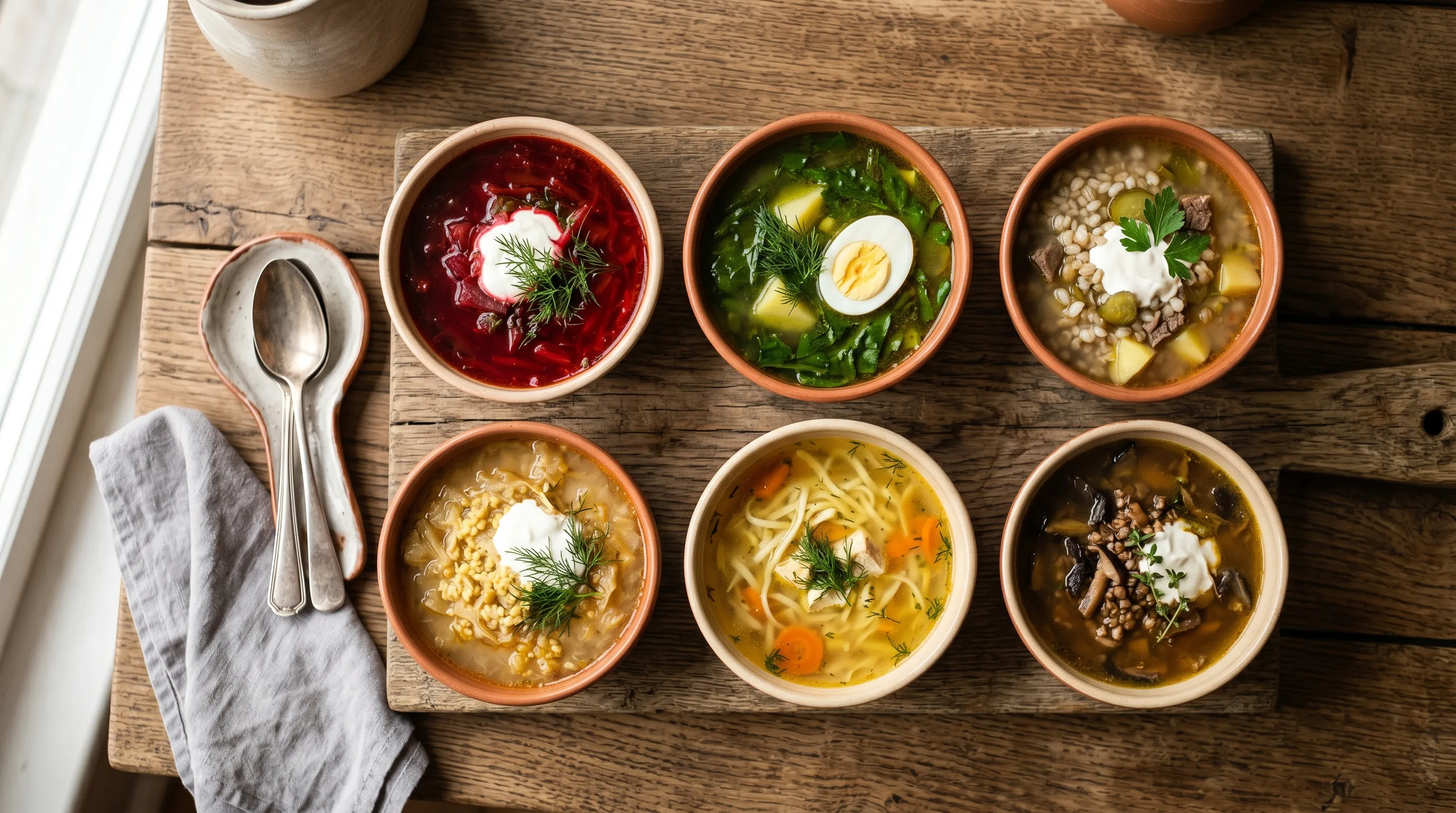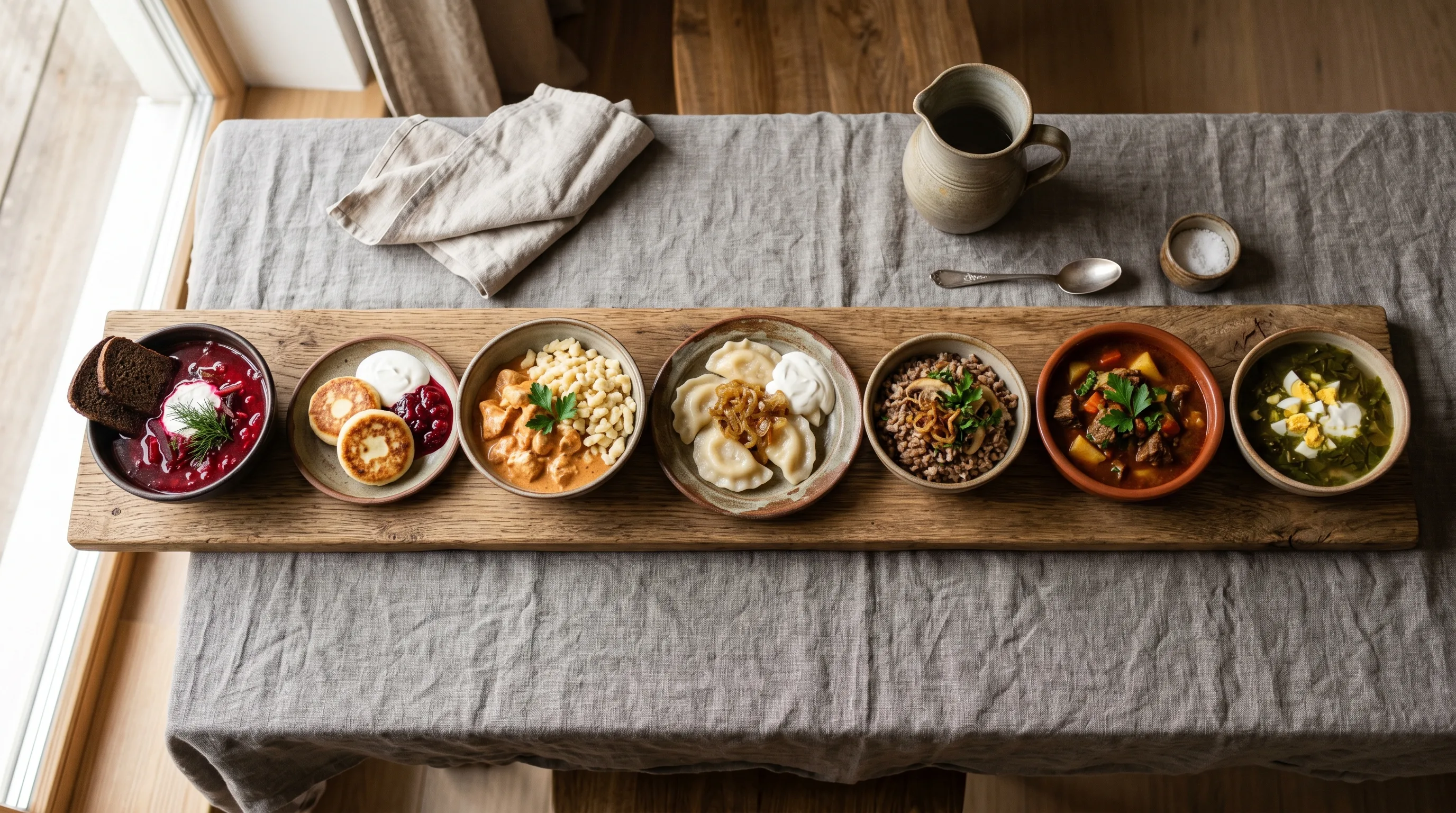
If you grew up in Eastern or Central Europe, or have ever had a bowl of beet-red borscht on a cold evening, you already know this cuisine was built on soup. Long before anyone called it ‘bone broth’, Ukrainian grandmothers were simmering vegetable broths every day. And soup happens to be the easiest place to eat well here: these are filling, nutrient-dense meals that stay light without losing any flavour. This guide covers the soups worth knowing from Ukraine, Slovakia, Poland, Hungary and across Central Europe, with a recipe link and nutrition numbers for each, plus how I lighten the traditional versions without wrecking them.
The Eastern European soup pantry, staple ingredients
Before diving into individual recipes, let us look at the building blocks that make these soups so nutritious. If you keep these in your kitchen, you can make almost any Eastern European soup on a weekday:
Vegetables
- Beets, rich in folate, manganese, and betalains (powerful anti-inflammatory antioxidants); give borscht its iconic deep red colour
- Cabbage, high in vitamin C and K; supports digestion; the backbone of kapustnica and bigos soup
- Carrots, parsnips & celery root, form the ‘holy trinity’ base of Eastern European broths
- Potatoes, filling, high in potassium and B6; used as a natural thickener
- Sorrel (sour grass), the star of green borscht; extremely high in vitamin C and iron
Fermented & cultured foods
- Sauerkraut, probiotic powerhouse; adds the characteristic sour note without vinegar
- Kefir, used in some lighter soups instead of sour cream; more protein, fewer calories
- Kvass (fermented rye bread liquid), the base of rassolnik and some regional borscht varieties
- Sour rye starter (zakwas), the traditional base of Polish zurek
Protein sources
- Lean beef or chicken for broth, choose lean cuts or skim fat after cooking
- Beans and lentils, traditional in lean-day soups; high protein, high fibre
- Mushrooms, dried porcini and forest mushrooms give deep umami flavour; very low calorie
- Eggs, hard-boiled, added to finished soups for protein
Healthy swaps that work in every Eastern European soup
Traditional Eastern European recipes often call for lard, fatty pork cuts, or heavy sour cream. These small swaps preserve 100% of the flavour while cutting significant calories:
The 6 healthiest Eastern European soups, at a glance
Here is your complete overview of the soups covered in this pillar, with a quick nutritional snapshot for each:
How to meal-prep Eastern European soups for the week
One handy thing about these soups: they keep well and often taste better the next day as the flavours deepen. Here is my weekly meal-prep routine:
- Sunday: Make a large batch of base vegetable broth (2–3 litres). This is the foundation of everything.
- Split the broth into two pots. Make borscht in one and a lighter vegetable soup in the other.
- Portion into glass containers (400–500ml each). Label with date and calorie count.
- Refrigerate up to 4–5 days or freeze up to 3 months.
- Reheat gently on the stovetop, never microwave borscht or it loses its beautiful colour.
Eastern European soups and weight loss: what the science says
Research consistently shows that starting a meal with a low-calorie broth-based soup reduces total calorie intake at that meal by 20–30%. Eastern European soups are the perfect first course or a complete light meal because:
- The high volume of water and fibre from vegetables triggers satiety signals early
- Fermented elements (sauerkraut, sour rye) promote diverse gut microbiome, linked to healthier body weight
- Root vegetables provide slow-release carbohydrates that prevent blood sugar spikes
- Bone broths and lean meat broths are high in protein, which is the most satiating macronutrient
- Traditional Eastern European soups typically contain no ultra-processed ingredients
Frequently asked questions
Are Eastern European soups healthy?
Yes, extremely so. Traditional Eastern European soups are built on vegetables, lean broths, and fermented ingredients. They are naturally low in calories, high in fibre, and rich in vitamins and minerals. The key is making simple modern swaps: replace lard with olive oil, use low-fat dairy, and reduce added salt.
Can I eat borscht and other Eastern European soups on a weight loss diet?
Absolutely. Most Eastern European soups run 110–250 calories per generous serving, which suits calorie-controlled eating. They are also very filling due to their high water and fibre content, so you are less likely to snack afterwards.
Are Eastern European soups gluten-free?
Most traditional vegetable soups, borscht, green borshch, mushroom soup, are naturally gluten-free. Polish zurek is the notable exception as it is based on fermented rye flour. Kapustnica and rassolnik can be made gluten-free easily by omitting barley or using certified GF oats instead.
What is the difference between borscht and borshch?
Both spellings refer to the same beet-based soup, just transliterated differently from Cyrillic. ‘Borscht’ is the Yiddish-influenced English spelling. ‘Borshch’ is a more direct Ukrainian transliteration. In this blog I use both, they are the same delicious soup!
How do I make Eastern European soups vegan?
Most of these soups adapt easily to vegan versions. Replace meat broth with mushroom or vegetable broth (dried porcini mushrooms create incredible depth). Skip meat or replace with beans or tofu. Use coconut yogurt or cashew cream instead of sour cream.
Internal links in this series
Explore each soup in detail with its own full recipe, step-by-step photos, and complete nutrition breakdown:
- ➜ Healthy Borscht Recipe, Low Calorie Ukrainian Beet Soup (under 160 calories)
- ➜ Healthy Green Borshch (Sorrel Soup), Spring Detox Recipe
- ➜ Lighter Slovak Kapustnica, Traditional Cabbage Soup Made Healthy
- ➜ Healthy Ukrainian Rassolnik, Pickle Soup for Digestion
- ➜ Healthy Polish Zurek, Fermented Rye Soup with Eggs
- ➜ Low-Calorie Hungarian Mushroom Soup, Creamy Without the Cream