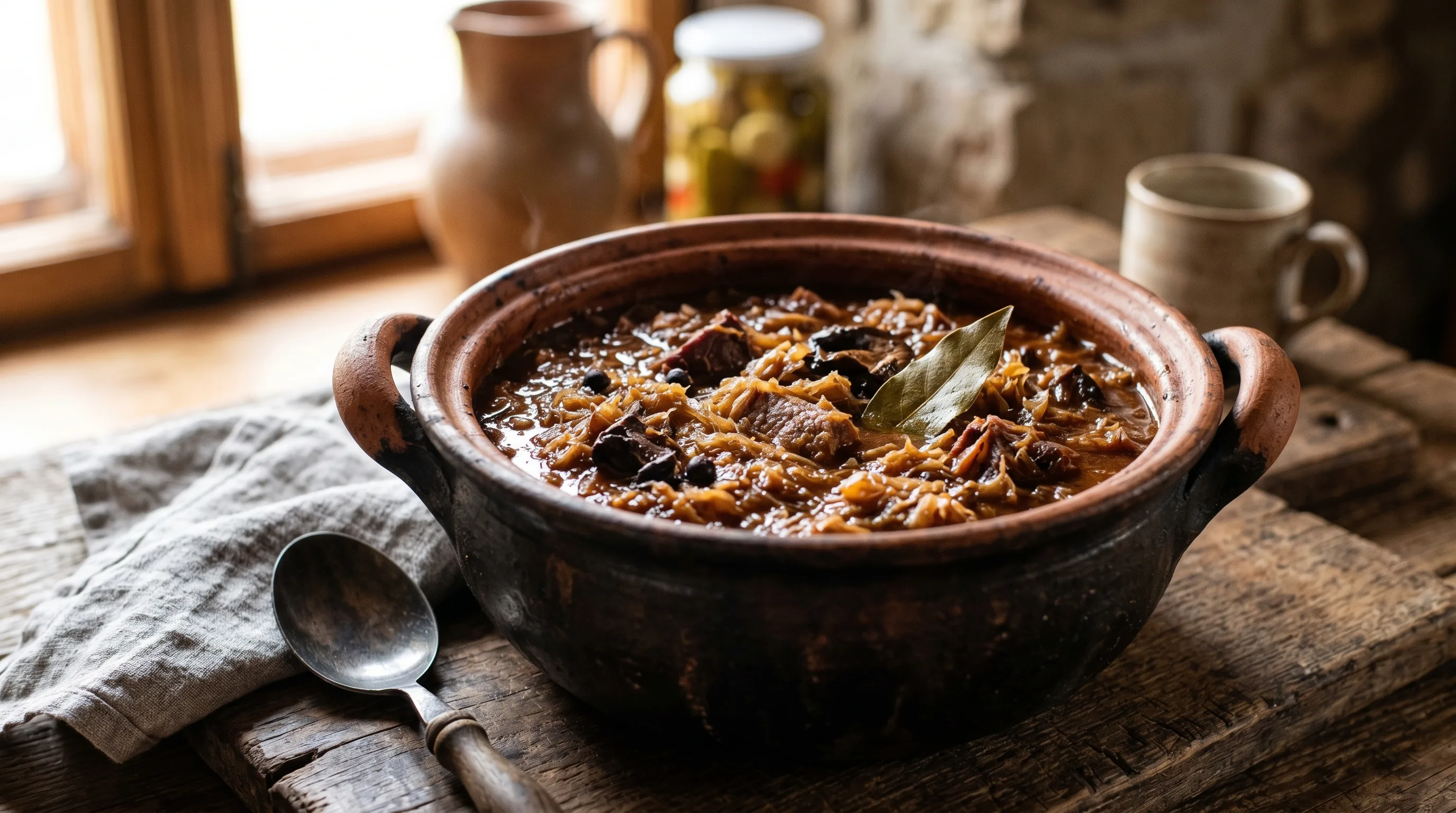
Polish cuisine is one of Eastern Europe’s most internationally recognised food traditions, carried across the world by one of the largest diasporas in Europe and North America. Pierogi in Chicago, bigos in London, żurek in Warsaw, barszcz at Christmas Eve supper, Polish food travels beautifully and is loved globally. Polish cooking’s great strength for healthy eating is its probiotic richness. Sauerkraut, fermented dill pickles, kwas buraczany (fermented beet juice), żurek (fermented rye soup), and kefir-like dairy products are all daily staples of traditional Polish eating. No European cuisine exceeds Poland in the daily volume and variety of fermented foods consumed.
The 8 healthiest traditional Polish dishes
The Polish pantry: essential ingredients
- Naturally fermented sauerkraut (kapusta kiszona), buy from a Polish deli for the real thing
- Naturally fermented dill pickles (ogórki kiszone), essential; must be fermented, not vinegar-brined
- Marjoram (majeranek), the defining herb of Polish meat dishes and żurek
- Fermented rye starter (zakwas) for żurek, make your own (3-day ferment) or buy at Polish deli
- White borscht beet base, for barszcz; roast beets and ferment briefly for depth
- Lovage (lubczyk), the underused Polish herb with incredible depth; adds to broths
- Lean turkey kielbasa, replaces fatty pork kielbasa in bigos and soups
The Żurek deep dive: Poland’s most nutritious traditional soup
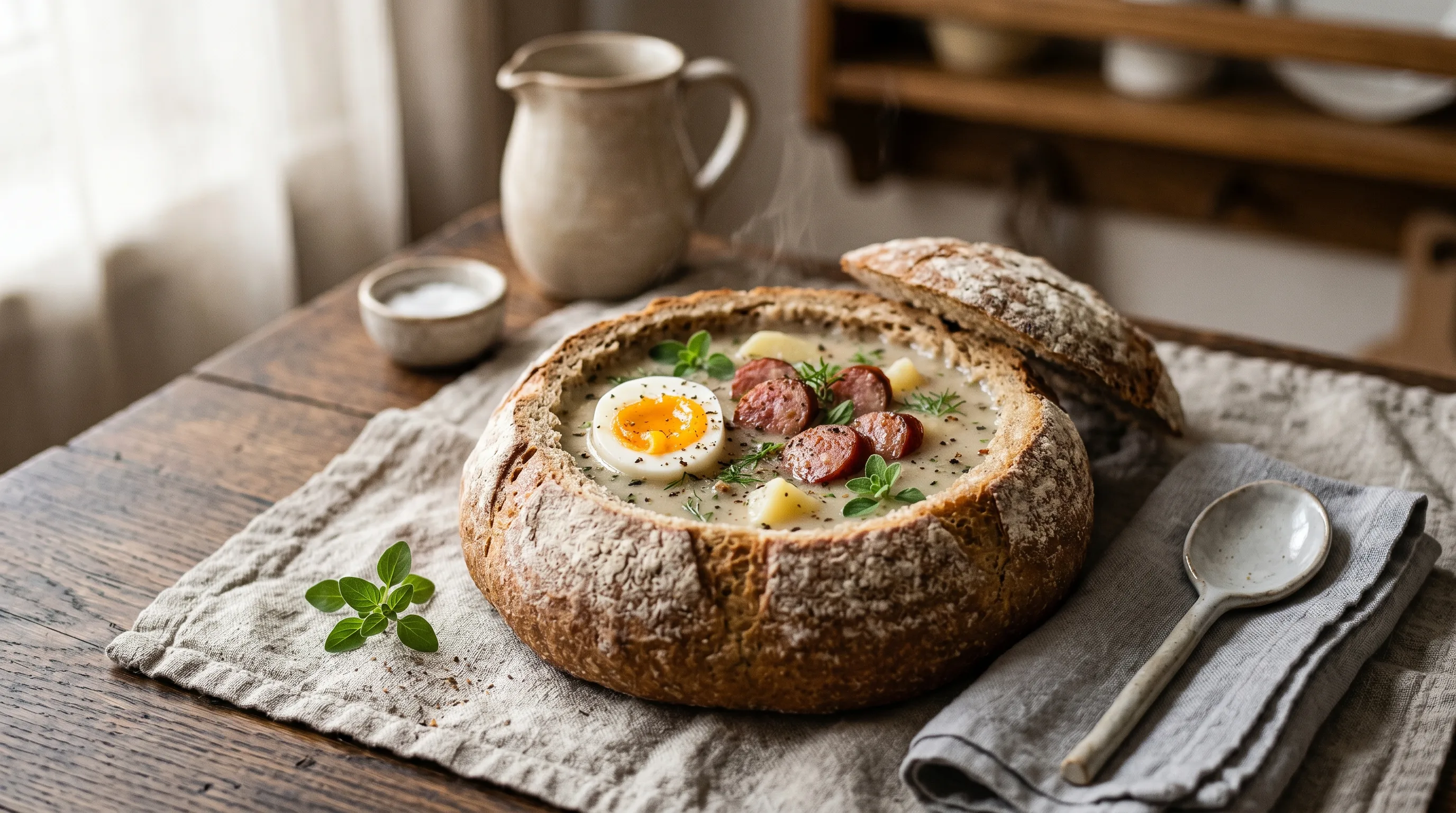
Żurek is one of Poland’s most ancient and distinctive dishes, a sour soup made from fermented rye starter (zakwas), served with hard-boiled eggs and occasionally kielbasa. It is Poland’s version of a probiotic broth, eaten at Easter and throughout the year. At 190 calories per bowl with 18g of protein and genuine probiotic fermented rye content, żurek is one of the more nutritious traditional soups in Eastern European cooking. The fermented rye starter (zakwas) takes 3–5 days to make but lasts in the fridge for weeks.
The Christmas Eve table (Wigilia): healthy options
Polish Christmas Eve (Wigilia) traditionally features 12 meatless dishes. Several of these are already excellent diet food:
- Barszcz z uszkami, clear beet broth with tiny mushroom dumplings (~80 kcal)
- Kapusta z grzybami, sauerkraut with mushrooms (~100 kcal), probiotic side
- Śledź w oleju, pickled herring, high omega-3, probiotic from the brine (~150 kcal)
- Kompot z suszonych owoców, dried fruit compote, traditional Christmas drink (~80 kcal)
- Pierogi z kapustą i grzybami, mushroom-sauerkraut pierogi, baked not fried (~260 kcal)
Frequently asked questions
What is the healthiest traditional Polish food?
Barszcz czerwony (plain beet broth) is the lowest calorie at approximately 80 kcal per bowl. For a complete meal, żurek is the most nutritionally impressive, 190 calories with 18g protein and genuine probiotic fermented rye. Chłodnik (cold kefir-beet soup) is great for summer at 130 calories and full of probiotics.
Is Polish food heavy?
Traditional Polish food has a heavy reputation, but like all Eastern European cuisines, the heaviness is concentrated in specific dishes, heavy smoked meats, lard, thick sour cream. The vast majority of the Polish culinary tradition, its soups, its fermented vegetables, its fish dishes, its egg and dairy preparations, is light and nutritious.
Where can I buy authentic fermented Polish pickles outside Poland?
Look for the words ‘kiszone’ (fermented) not ‘konserwowe’ (preserved/pickled in vinegar). The best sources are Polish delicatessens, Eastern European grocery stores, and farmers markets in areas with Polish communities. Online Polish food retailers ship across Europe. In health food stores, look for naturally fermented sauerkraut in the refrigerated section, the same suppliers usually carry fermented pickles.