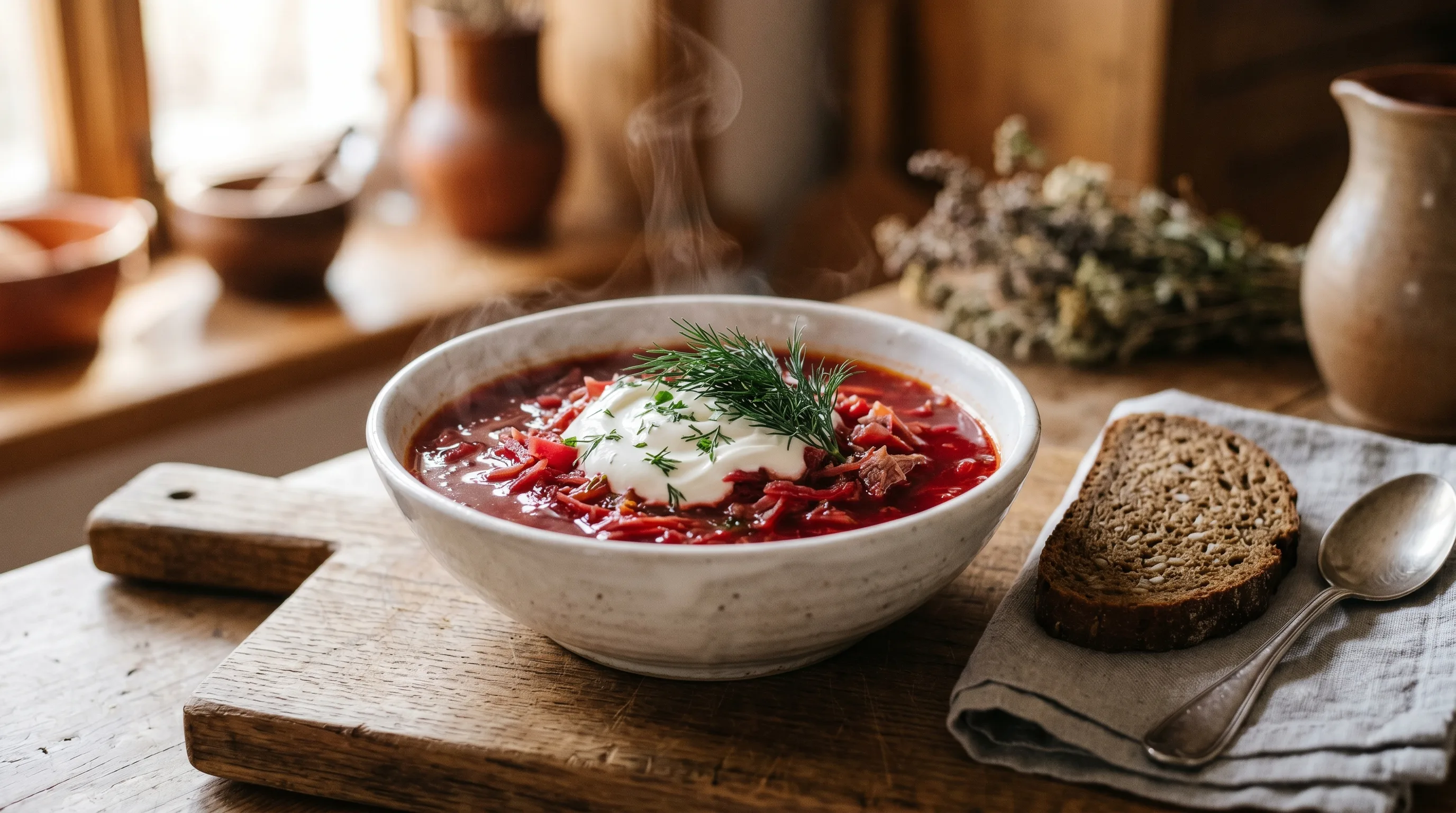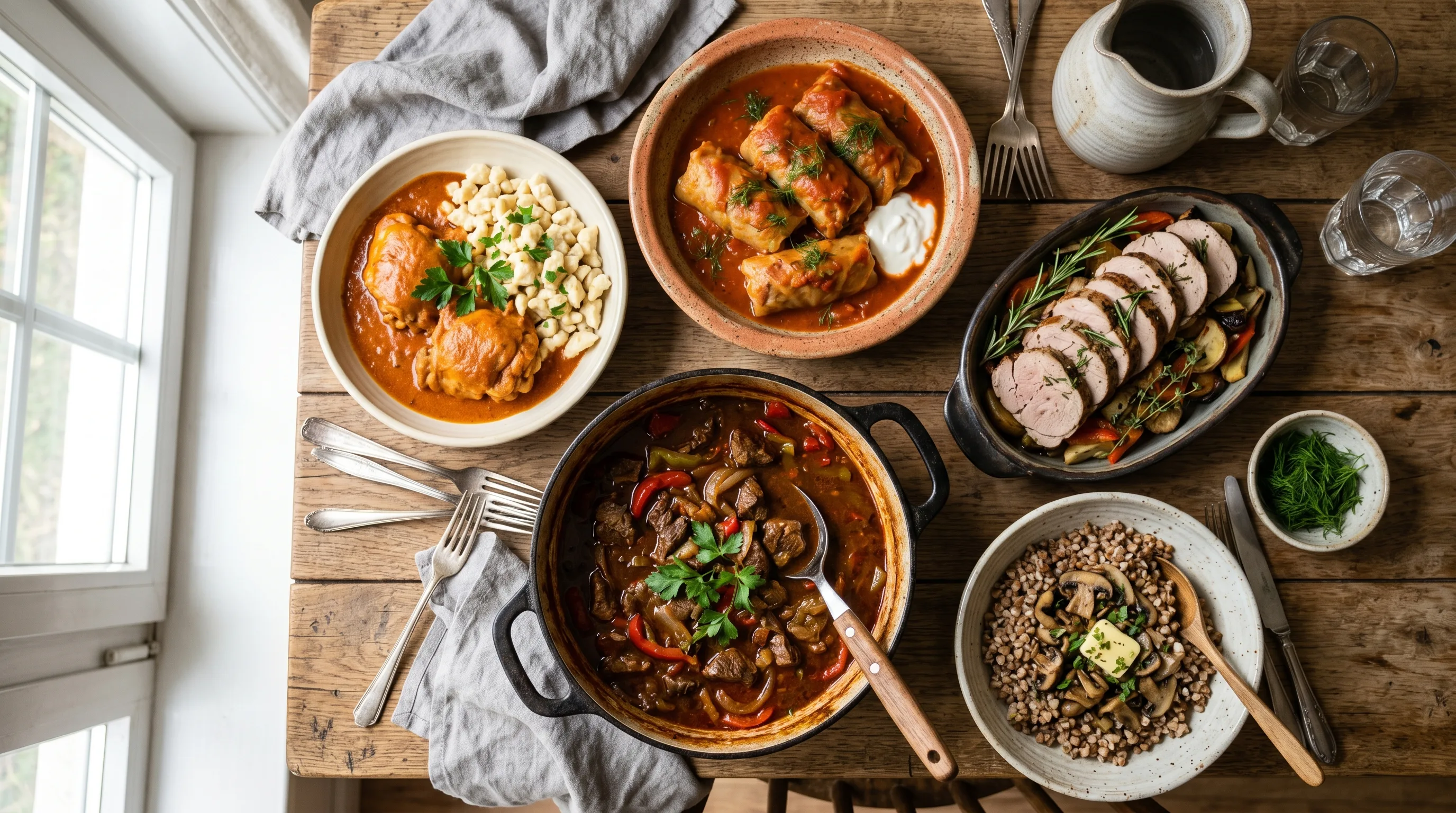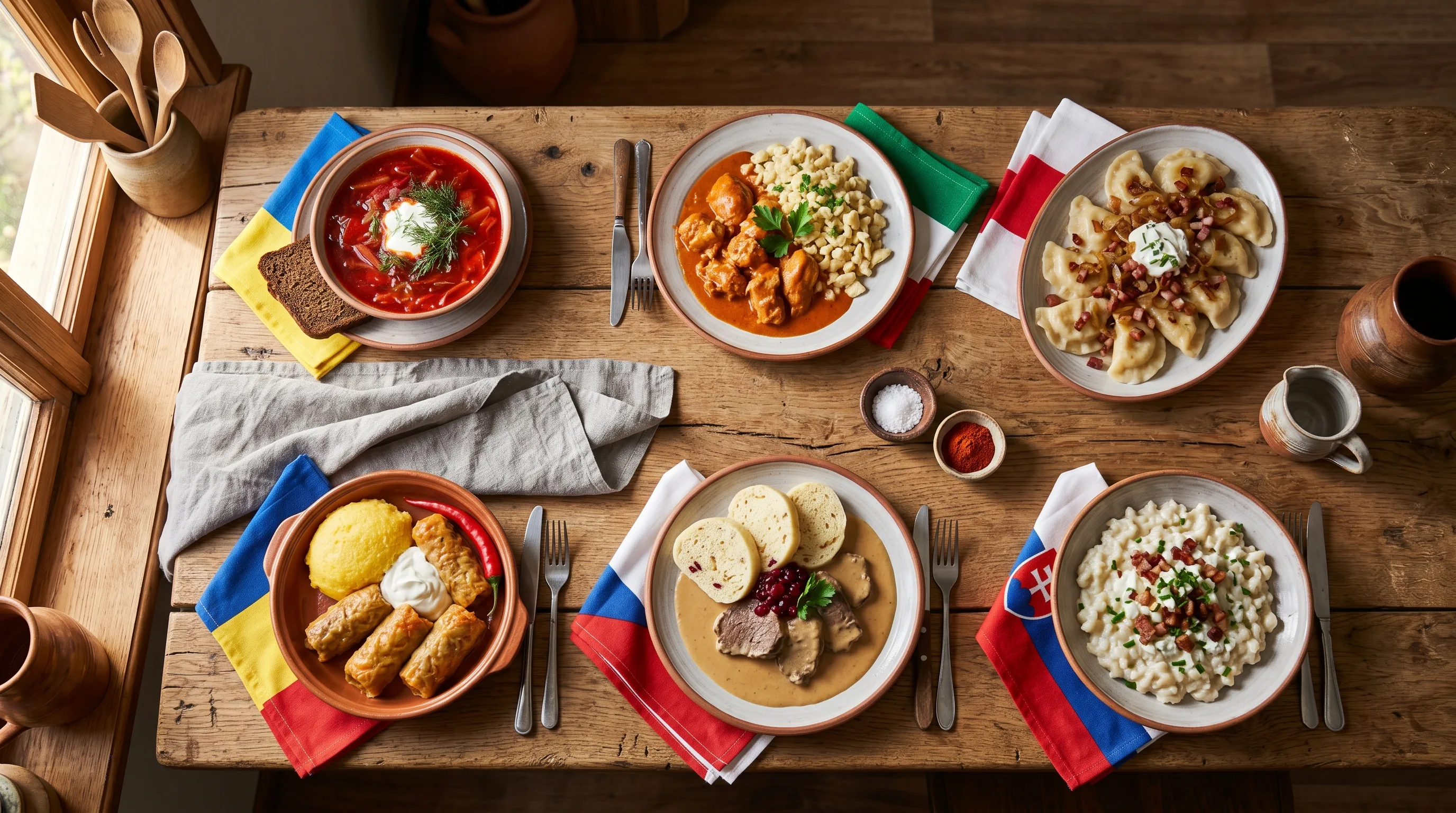
Romanian cuisine is the least internationally known of the traditions in this blog, and one of the more interesting from a healthy-cooking angle. Romania sits at the crossroads of Eastern Europe, the Balkans, and the Ottoman food world, producing a cuisine that is simultaneously familiar and completely distinctive. Romania’s greatest gift to healthy Eastern European eating is ciorbă, a family of sour, broth-based soups made with fermented bran water (borș), lemon juice, or vinegar. These are among the lightest, most complex, most beautiful soups in all of European cooking, and they are almost entirely unknown outside Romania.
Romania’s healthiest traditional dishes
Romanian cooking is built on sour soups, cornmeal and fermented cabbage, which is most of a healthy-eating toolkit before you even start adapting. The three that do the most work are ciorbă, mămăligă and sarmale, and each gets its own section below.
The ciorbă tradition: Romania’s greatest healthy-eating asset
Ciorbă is a category of sour soups that defines Romanian home cooking. The souring agent traditionally is borș, a fermented wheat bran liquid, but lemon juice and vinegar are also used. What makes ciorbă special from a nutrition perspective is this combination:
- Very low calorie density, the sour broth suppresses appetite while providing enormous volume
- Rich in vegetables, Romanian ciorbă uses seasonal vegetables generously
- Naturally probiotic when made with traditional borș souring agent
- High in electrolytes, the sour broth is naturally rehydrating
- Anti-inflammatory compounds from the lovage herb (leuştean) used in almost all ciorbă
How to make simple ciorbă de legume (Sour vegetable soup)
This is Romanian cooking at its most accessible and its most diet-friendly:
- Simmer diced carrot, celeriac, parsley root, and potatoes in vegetable broth for 20 minutes
- Add shredded cabbage or whatever seasonal vegetable is available
- Finish with juice of 1–2 lemons (or 2 tbsp apple cider vinegar) and fresh lovage or parsley
- Stir in 2 tbsp low-fat yogurt off the heat for creaminess if desired
- Season generously. Serve with rye bread. Approximately 90 calories per bowl.
Mămăligă, Romania’s ancient superfood
Mămăligă is Romanian polenta, cornmeal porridge that has been the staple food of Transylvania, Moldavia, and Wallachia for centuries. It is naturally gluten-free, surprisingly nutritious (yellow cornmeal provides beta-carotene, B vitamins, and fibre), and extremely versatile. In healthy Romanian cooking, mămăligă replaces bread, dumplings, and white rice. Served with a portion of ciorbă alongside, it makes a complete, traditional Romanian meal at approximately 300–350 calories total.
Sarmale, Romania’s stuffed cabbage rolls in sauerkraut
Romanian sarmale are stuffed cabbage rolls similar to Ukrainian holubtsi, but with a distinctive difference: sarmale are wrapped in sauerkraut (fermented cabbage) leaves rather than fresh cabbage. The kraut leaf is filling, wrapper and probiotic all at once, which is a neat trick. The fermented cabbage wrapper brings sour depth, probiotics and vitamin C. With a lean pork-and-turkey filling and a slow tomato braise, sarmale come in around 270 calories and still eat like a proper Sunday dish.
Frequently asked questions
What makes Romanian ciorbă different from borscht?
Borscht is primarily a beet-based soup, the sourness and colour come from beets. Romanian ciorbă is a category of sour soups where the sourness comes from borș (fermented wheat bran water), lemon juice, or vinegar, and can be made with almost any vegetables or meat. Ciorbă does not use beets as a primary ingredient. Both traditions share the sour flavour profile but arrive at it through completely different ingredients.
What is borș and can I make it?
Borș (not to be confused with borscht) is a fermented liquid made from wheat bran, corn bran, or bread crusts fermented in water. It is the traditional souring agent for Romanian ciorbă. You can make it by fermenting 200g wheat bran in 1 litre of warm water for 3–4 days at room temperature, then straining. It will smell pleasantly sour like vinegar. If unavailable, substitute with lemon juice or apple cider vinegar.
Is Romanian food spicy?
Surprisingly, no, despite its Balkan and Ottoman influences, Romanian food is generally not spicy hot. The bold flavours come from fermented and sour elements, aromatic herbs (lovage, thyme, dill), and slow cooking rather than chilli heat. The one exception is mici (grilled sausages) which contain mustard and sometimes red pepper, but even these are more aromatic than hot.
— End of Pillar 5: Country-Specific Recipe Guides — All 5 Content Pillars Complete, NataliDiet.eu