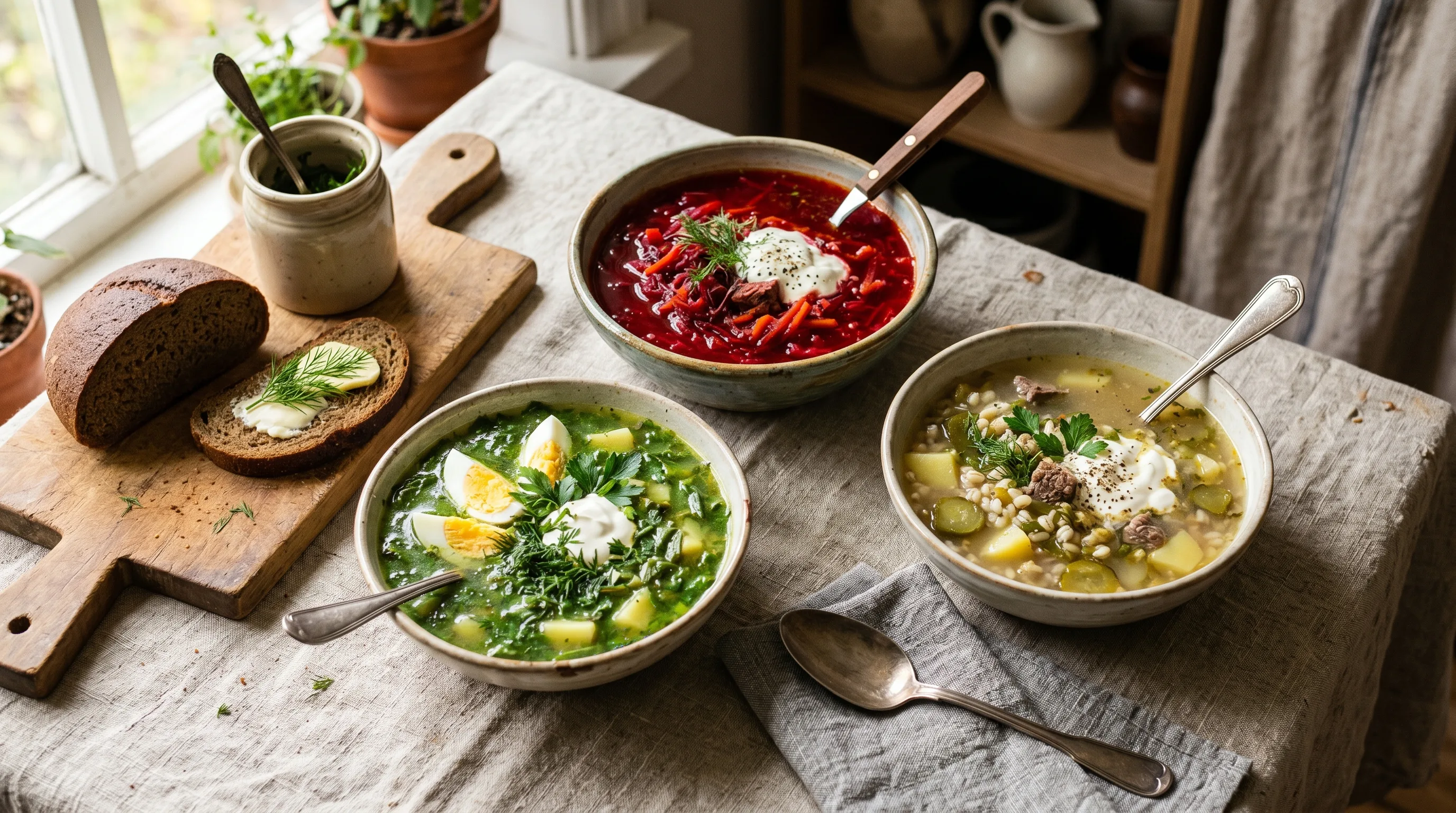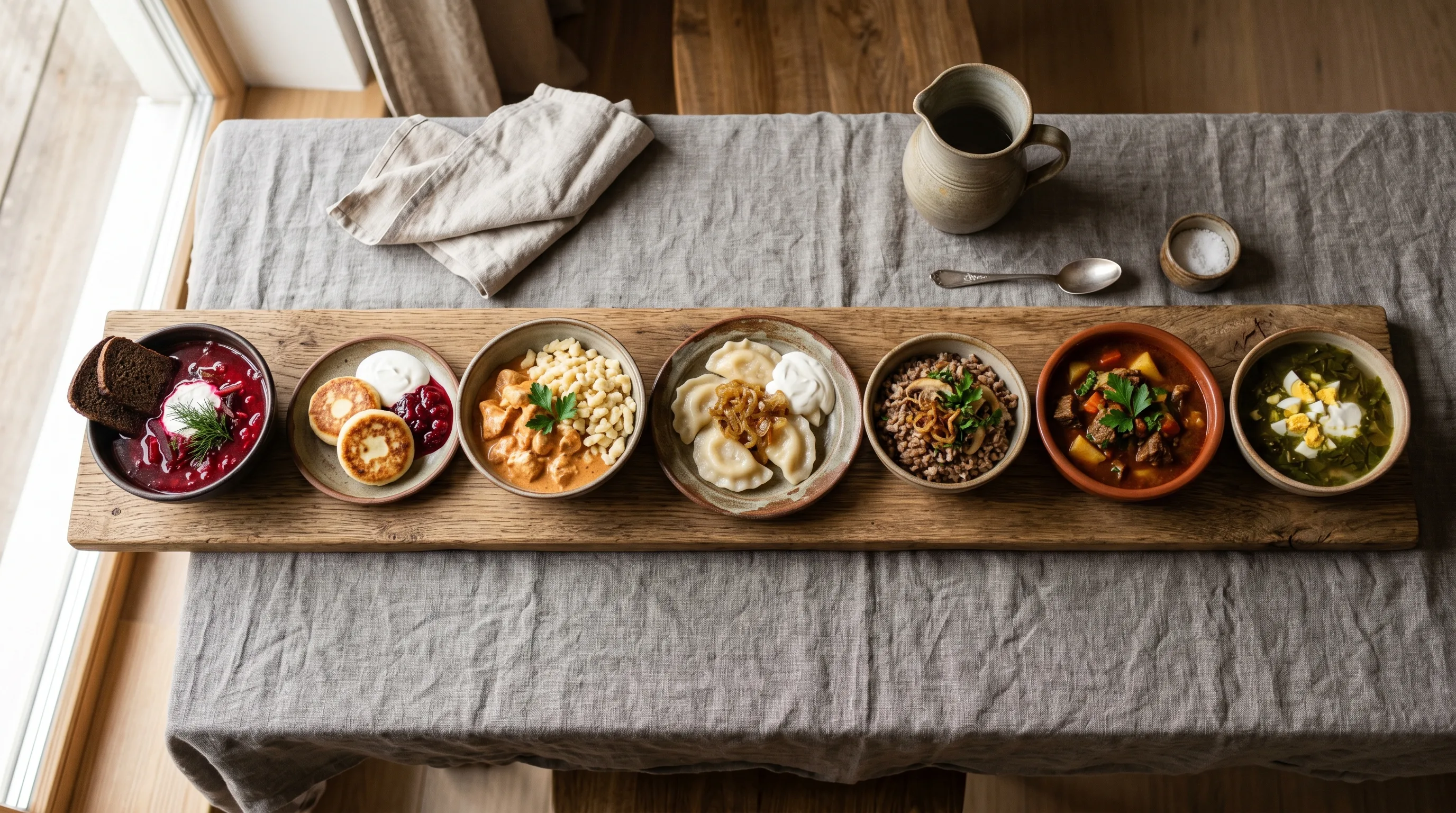
Traditional Eastern European food is, in many ways, already healthy. The problem is not the cuisine, it is how it evolved over the 20th century. Soviet-era food shortages made fat the primary calorie source. Post-communist access to cheap refined carbohydrates changed eating patterns. The loss of traditional small-portion wisdom followed. This pillar is about going back. Back to the authentic roots of these dishes, stripping away the accumulated layers of excess fat and poor-quality ingredients, and revealing the nourishing food that was always underneath.
The 6 dishes in this pillar
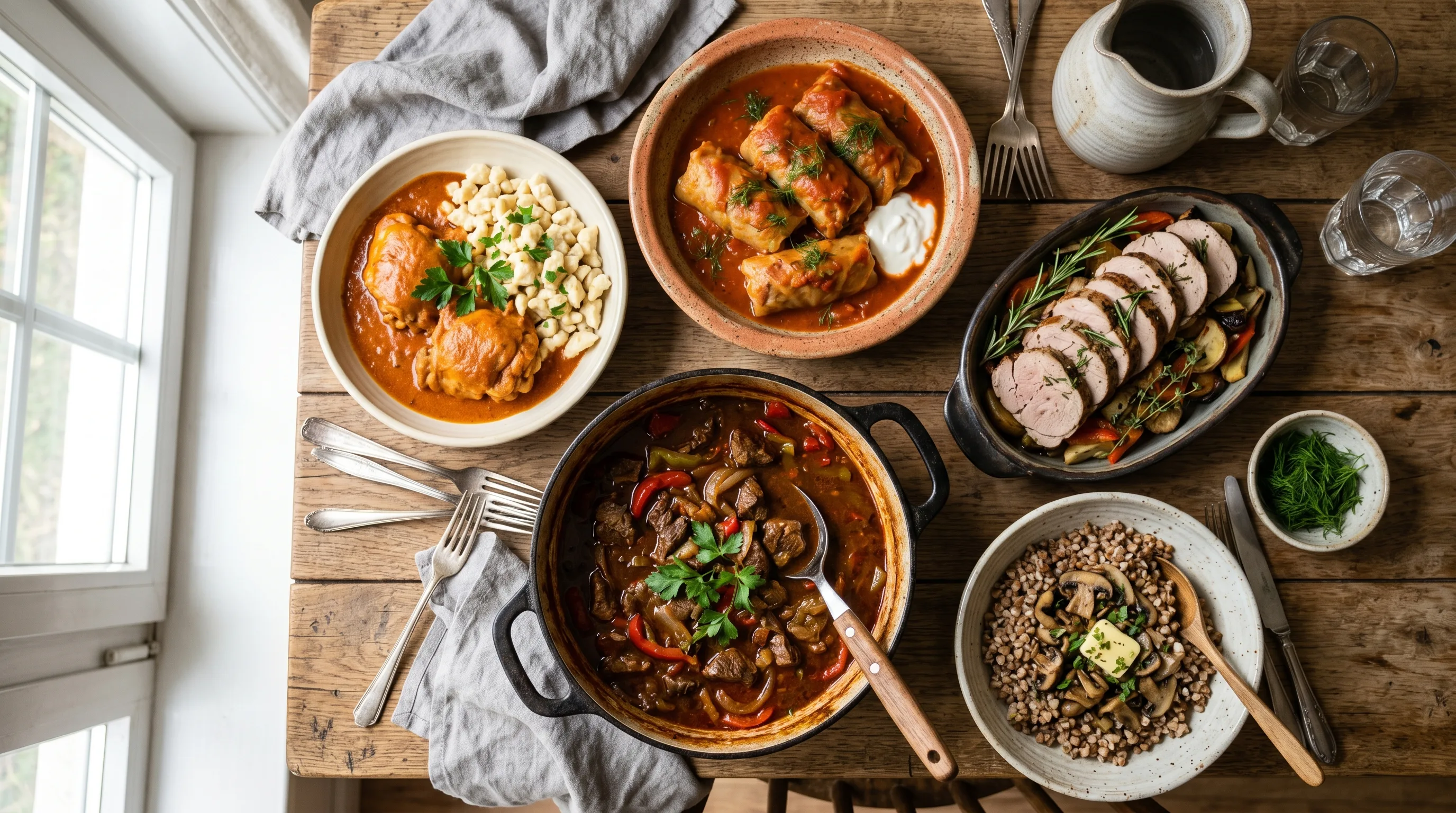
The main-dish pillar rebuilds six classics so they land under 400 calories without losing what makes them worth cooking:
- Chicken paprikash with Greek yogurt (310 kcal)
- Holubtsi, cabbage rolls in tomato sauce (280 kcal)
- Hungarian goulash, lighter but still deep (340 kcal)
- Baked varenyky/pierogi (320 kcal)
- Buckwheat with mushrooms (290 kcal)
- Slovak pork tenderloin (360 kcal)
The principles below are what make those swaps work, and they carry over to almost any dish in the tradition.
Universal principles for healthy traditional cooking
1. Find the Original Recipe
Modern versions of traditional dishes are almost always heavier than the historical originals. Pre-industrial peasant cooking used fat as a precious resource, not a casual ingredient. Going back to the oldest available sources often reveals a dish that was never as heavy as modern versions suggest.
2. Moisture Management is Everything
The technique that changes the most, when you want lighter Eastern European cooking, is moisture removal. Grating potatoes for deruny and NOT squeezing out the liquid is the primary reason home-made versions absorb far too much oil. Remove the moisture first, and the batter becomes light and crisp without excess oil.
3. Oven-Finishing Instead of Pan-Frying
Many traditional dishes are pan-fried throughout. The healthy modern technique: sear briefly in a small amount of oil for colour and flavour, then finish in a hot oven at 200°C. Same golden exterior, fraction of the fat.
4. the dairy technique (Revisited)
Low-fat Greek yogurt replaces full-fat sour cream in all cooked applications, always off the heat, stabilised with a little cornstarch. In cold applications (dressings, cold dips), low-fat sour cream performs better than yogurt.
Frequently asked questions
Can traditional Eastern European food be light?
Yes, and the historical evidence is clear. Pre-industrial peasant cooking was light because fat was scarce and expensive. The heavy versions we associate with these cuisines are largely a product of the 20th century. The original dishes are often beautifully lean.
Do these healthier versions taste like the real thing?
For most dishes in this pillar, yes, very closely. Baked deruny taste nearly identical to fried ones. Syrniki with oat flour are excellent. The dish where the healthy version differs most noticeably is svíčková, the cream sauce is distinctive and the yogurt version, while delicious, is somewhat lighter in texture.
Which dish is easiest to make healthy?
Syrniki are the easiest, the original is already quite lean. Bigos is the most forgiving for batch cooking. Deruny require the most technique (moisture removal) but once you learn it the technique is simple.
See also: