
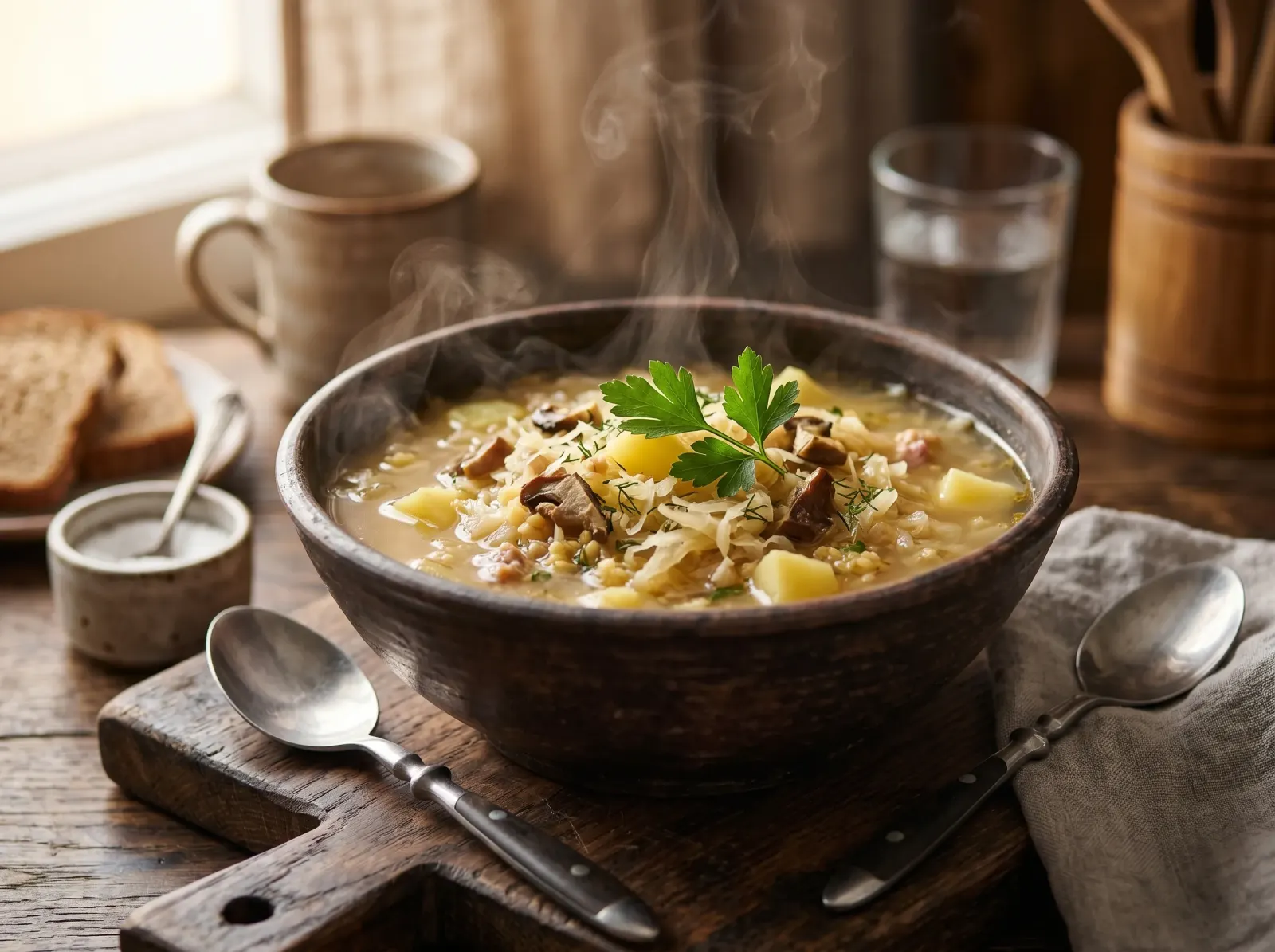
Kapustnyak — Ukrainian Sauerkraut Soup
A satisfying Ukrainian sauerkraut soup. Probiotic-rich, only 175 calories, and ready in 35 minutes. One of Eastern Europe's best-kept weight loss secrets.
- sauerkraut, roughly chopped 300g
- potatoes, peeled and diced 2 medium
- carrot, grated 1 medium
- onion, finely diced 1 medium
- garlic, minced 2 cloves
- tomato paste 1 tbsp
- olive oil 1 tsp
- vegetable stock (low-sodium) 1 litre
- bay leaf 1
- caraway seeds ½ tsp
- salt and black pepper to taste
- fresh parsley, to serve 2 tbsp
- 1
Heat olive oil in a large pot over medium heat. Add onion and carrot. Cook 6–8 minutes until softened and beginning to caramelise.
- 2
Add garlic and tomato paste. Stir and cook for 1 minute.
- 3
Add sauerkraut, potatoes, bay leaf, and caraway seeds. Pour in the stock.
- 4
Bring to a boil, then reduce heat. Simmer partially covered for 25 minutes until potatoes are tender and sauerkraut is soft.
- 5
Remove bay leaf. Taste and season — sauerkraut is already salty so add salt carefully.
- 6
Serve in deep bowls with fresh parsley. Improve overnight in the fridge.
Kapustnyak is the soup that Eastern European grandmothers made to get through winter. Sauerkraut, fermented white cabbage, is an underrated ingredient: probiotic-rich, almost no calories, and it gives this soup a depth no fresh vegetable can match.
At 175 calories for a large bowl, this is one of the more filling soups in the Eastern European repertoire.
Frequently asked questions
Should I rinse the sauerkraut first?
Taste it first. Rinse only if it's very sharp, the brine carries much of the flavour that makes kapustnyak distinctive.
Can I add meat?
Traditional versions use pork or sausage. Lean turkey kielbasa adds the smoky note while keeping the bowl light.
Does it freeze well?
Yes, up to 3 months. The potatoes soften slightly on thawing but the flavour holds.
 lunch
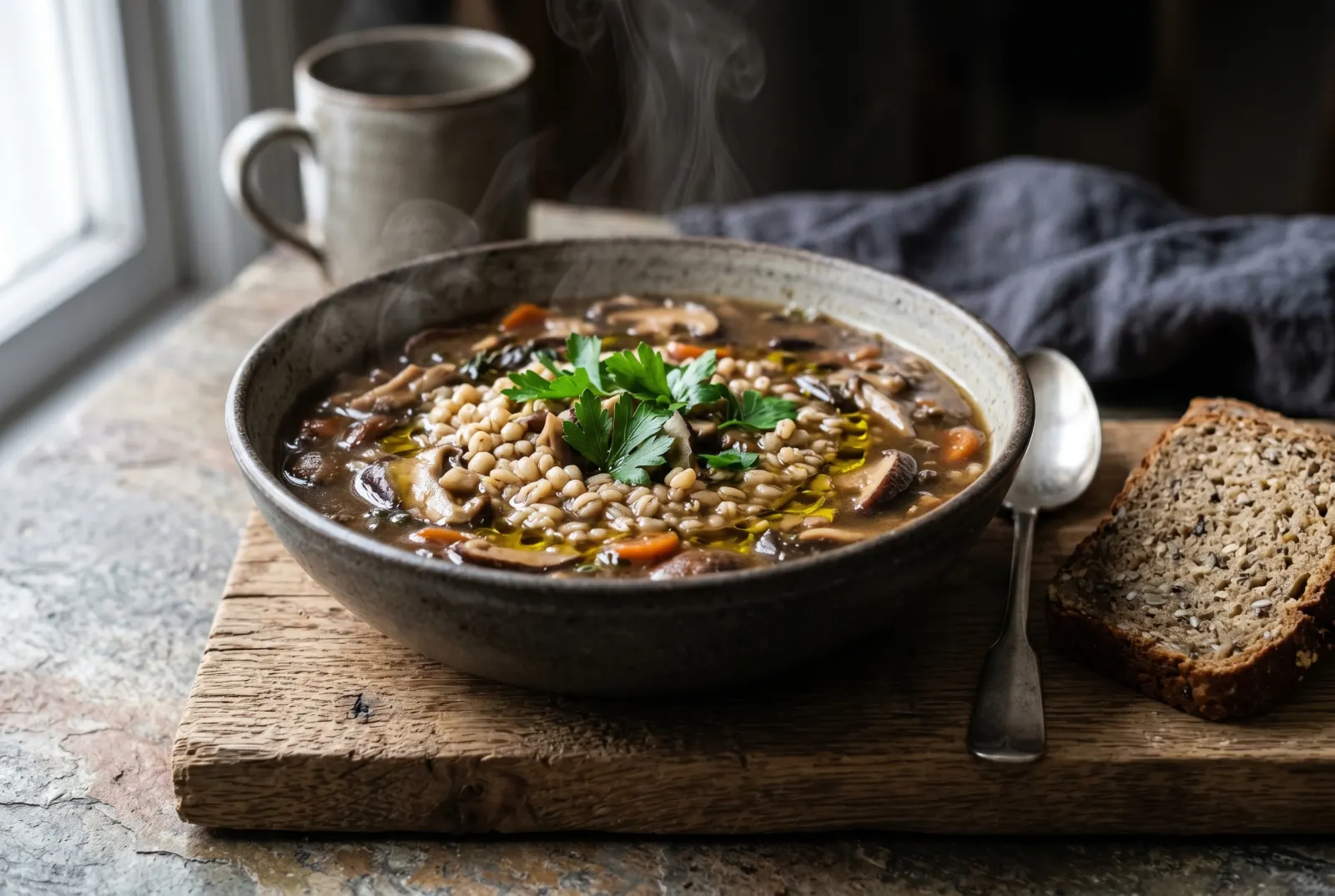
lunch Pearl Barley & Mushroom Soup
A thick, warming Eastern European soup with pearl barley, chestnut mushrooms, dried porcini, and aromatic vegetables. 195 kcal per serving, satisfying and completely plant-based.
 lunch
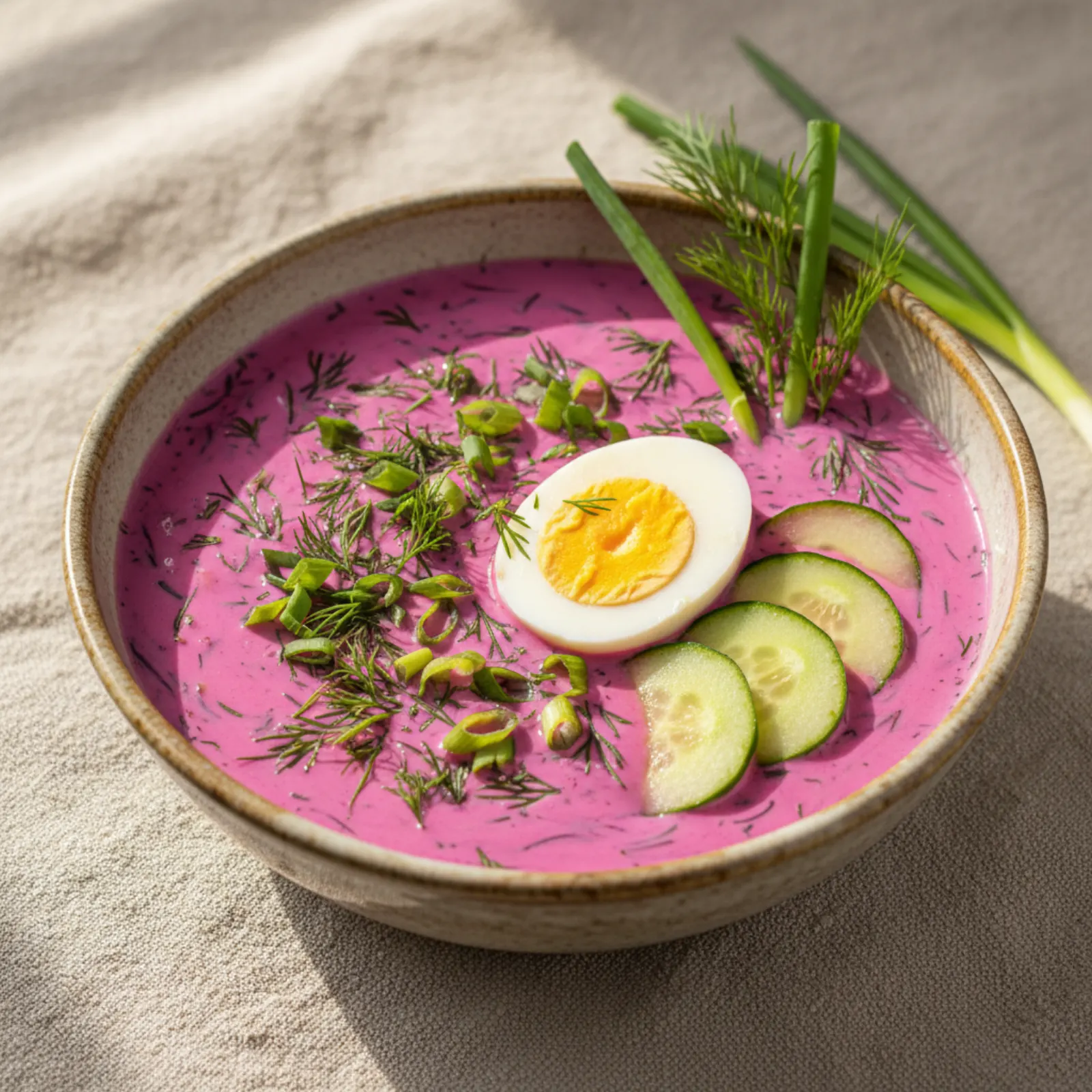
lunch Belarusian Kholodnik – A Chilled Pink Beet & Kefir Soup for Summer Days
This vibrant Belarusian chilled beet soup, known as Kholodnik, is made with kefir, fresh dill, and crunchy cucumber. It's a refreshing, low-calorie meal packed with probiotics to support gut health.
 lunch
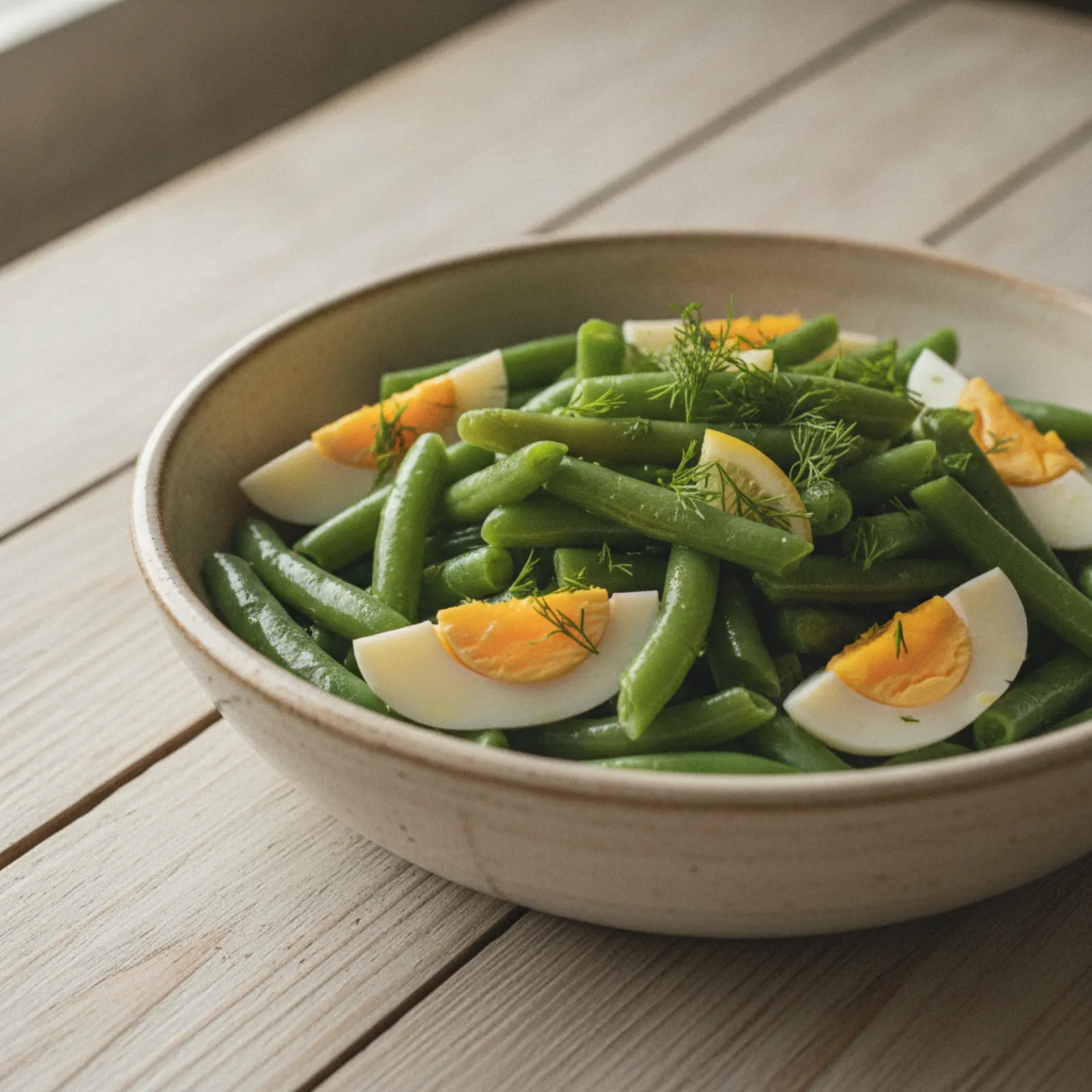
lunch Bulgarian Green Bean & Egg Salad (Salata ot Zelen Fasul s Yaitsa)
This classic Bulgarian salad combines tender green beans and hard-boiled eggs in a creamy, garlicky yogurt dressing. It's a satisfying, high-protein lunch that's perfect for staying full and managing your weight.